




Why backdrop size matters for professional photography
Choosing the wrong backdrop size derails framing, complicates lighting, and wastes studio space. Many photographers assume bigger always works better, but that approach ignores portability, storage, and shoot-specific needs. This article clarifies exactly how to match backdrop dimensions to your photography workflow, delivering sharper images and smarter studio efficiency.
Table of Contents
- Understanding Backdrop Size: Definitions And Basics
- How Backdrop Size Influences Framing And Composition
- Backdrop Size And Lighting Control
- Common Misconceptions About Backdrop Size
- Comparison Framework: Selecting The Right Backdrop Size
- Practical Guidelines For Choosing And Using Backdrop Sizes
- The Impact Of Backdrop Size On Post-Production And Image Quality
- Discover Your Perfect Backdrop Size With Instant Backdrops
Key takeaways
| Point | Details | |-------|---------|| | Proper backdrop size improves framing and lighting control | Correct dimensions prevent edge shadows and allow flexible composition without visible borders. | | Oversized backdrops complicate storage and setup | Larger backdrops demand more space, cost more to transport, and slow down setup workflows. | | Choosing backdrop size depends on subject, shoot type, and studio space | Product shots, full-body portraits, and lifestyle scenes each require different backdrop dimensions for optimal results. |
Understanding backdrop size: definitions and basics
Backdrop size refers to the width by height measurement of the material, typically expressed in feet. Common professional sizes include 5x7, 7x10, 8x12, and 10x12 feet. These dimensions directly determine how much background coverage you can capture in-frame.
Standard backdrop sizes break down into three categories:
- Small backdrops: 5x7 feet or smaller, ideal for tightly cropped product shots and jewelry photography
- Medium backdrops: 7x10 to 8x12 feet, versatile for most product and portrait work
- Large backdrops: 10x12 feet and above, necessary for full-body portraits and multi-subject compositions
Backdrop dimensions set hard limits on framing options. Shoot a full-body portrait on a 5x7 backdrop and you’ll capture edges in-frame, forcing awkward crops or distracting borders. Select large size backdrops and you gain freedom to reframe without worrying about visible boundaries.
Size also impacts studio space management. A 10x12 backdrop needs at least 12x14 feet of floor space when accounting for proper placement and lighting setups. Smaller studios often struggle with oversized backdrops, creating cramped shooting conditions that limit movement and equipment positioning.
How backdrop size influences framing and composition
Larger backdrops allow broader framing without showing edges. Shoot a three-quarter length portrait on an 8x12 backdrop and you can easily reframe in post without cropping into visible borders. Try the same shot on a 5x7 backdrop and you’ll constantly fight edge intrusion.
Small backdrops restrict shooting styles and force tighter crops. Product photographers working with compact items benefit from this constraint, keeping focus tight on the subject. However, lifestyle shots, fashion photography, and creative compositions demand breathing room that smaller dimensions simply can’t provide.
Always build in buffer space beyond your subject for flexible composition. Here’s why:
- Buffer zones prevent accidental edge capture during handheld shooting
- Extra background space allows dynamic angles without repositioning the backdrop
- Compositional adjustments in post-production require uncropped background area
- Lighting setups work better when the backdrop extends beyond the illuminated subject area
Proper backdrop sizing prevents unwanted cropping and visual distractions. Undersized backdrops force you into rigid framing that limits creative exploration and client satisfaction.
Pro Tip: Measure your most common subject dimensions and add 30% to each side to determine minimum backdrop width for comfortable shooting.
Backdrop size and lighting control
Large backdrops provide seamless areas that naturally reduce shadows. Position lights at proper distances and backdrops 8x10 feet or larger reduce edge shadows by up to 40% in controlled settings. This shadow minimization directly enhances product and lifestyle shots by creating cleaner, more professional results.
Shadow minimization matters most for:
- E-commerce product photography requiring pure white or neutral backgrounds
- Food photography where clean presentation drives purchase decisions
- Jewelry shots demanding crisp detail without competing visual noise
- Portrait work benefiting from smooth, graduated background lighting
Lighting depends on adequate background coverage for consistency. Small backdrops force lights closer to edges, creating uneven illumination and harsh transitions. Larger backgrounds let you position lights farther back, producing gradual falloff and smoother tonal ranges.
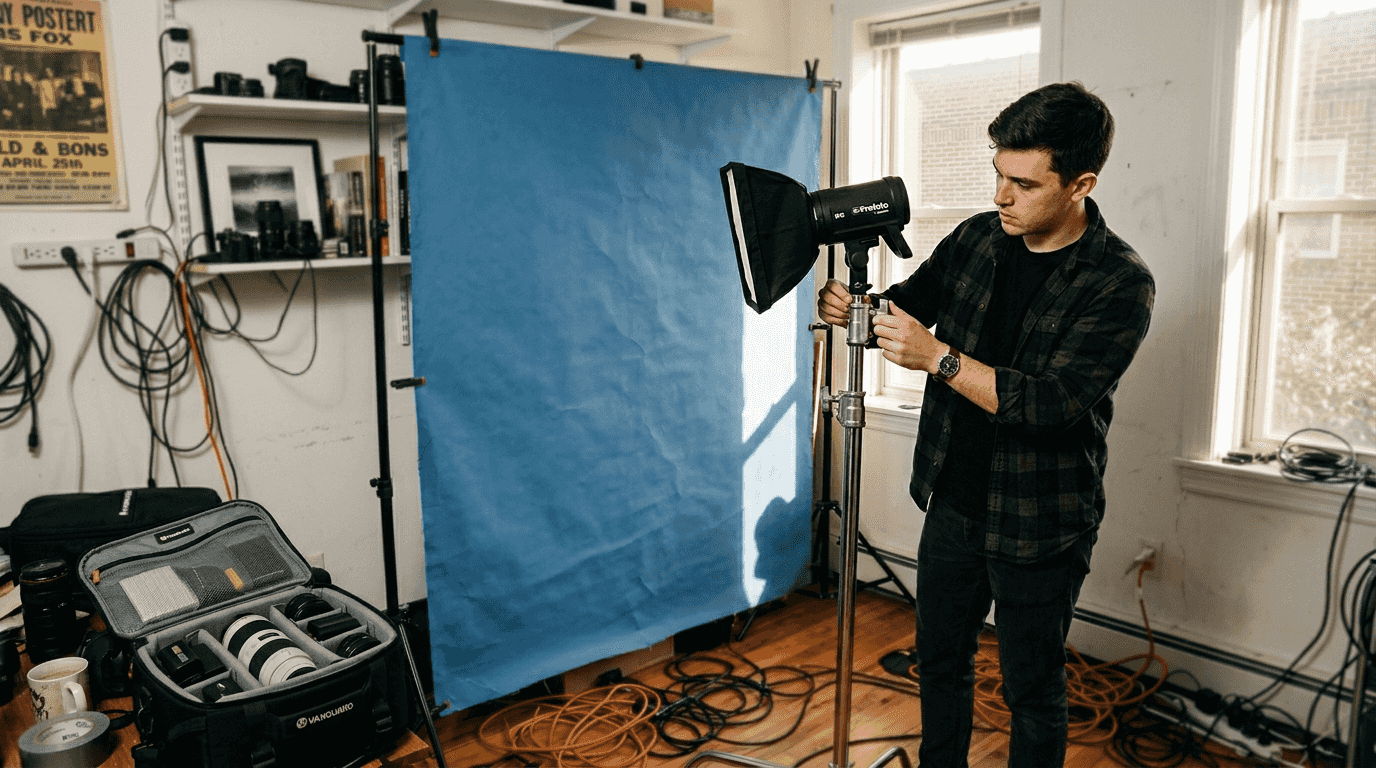
Improper backdrop size leads to distracting edge shadows that complicate post-production. You’ll spend unnecessary time cloning out shadow lines and correcting uneven backgrounds instead of delivering finished images. The role of backdrops in product photography extends beyond simple background coverage to fundamental lighting control that shapes image quality.
Common misconceptions about backdrop size
The assumption that bigger always equals better ignores portability and storage realities. A 10x20 backdrop delivers maximum coverage but becomes impractical for location shoots, small studios, or photographers working from home offices. Real-world constraints matter as much as technical ideals.
Small backdrops work exceptionally well for tight, cropped product shots. Jewelry photographers, watch sellers, and cosmetics brands rarely need more than 5x7 feet of background. Oversizing wastes money and complicates setups without improving final image quality.
Backdrop size needs depend on photography genre and shoot context:
- Product photography: size matches largest product dimension plus 40% buffer
- Portrait photography: full-body requires 8x10 minimum, headshots work on 5x7
- Food photography: 7x10 provides flexibility for overhead and angled shots
- Fashion photography: 10x12 or larger accommodates movement and full outfits
Choosing improperly sized backdrops leads to setup inefficiencies that drain time and creative energy. You’ll constantly reposition subjects, adjust framing to hide edges, or settle for compromised compositions that don’t match your vision.
“The right backdrop size isn’t about maximum dimensions. It’s about matching your specific shooting needs while maintaining practical workflow efficiency.”
Comparison framework: selecting the right backdrop size
This comparison breaks down how small, medium, and large backdrops perform across key criteria:
| Size Category | Dimensions | Pros | Cons | Best For |
|---|---|---|---|---|
| Small | 5x7 ft or less | Highly portable, easy storage, budget-friendly | Limited framing, visible edges on wider shots | Jewelry, small products, tight headshots |
| Medium | 7x10 to 8x12 ft | Versatile coverage, reasonable portability, balanced cost | May still show edges on full-body or group shots | Most product photography, portraits, food shots |
| Large | 10x12 ft and above | Maximum framing flexibility, superior shadow control, professional results | Requires dedicated space, harder to transport, higher cost | Full-body portraits, fashion, multi-subject compositions |
Small backdrops excel in controlled, tight shooting scenarios. Their portability makes them perfect for photographers working multiple locations or operating from compact home studios. However, using backdrops below 5x7 feet reduces usable frame coverage by 20% on average for small to medium products.
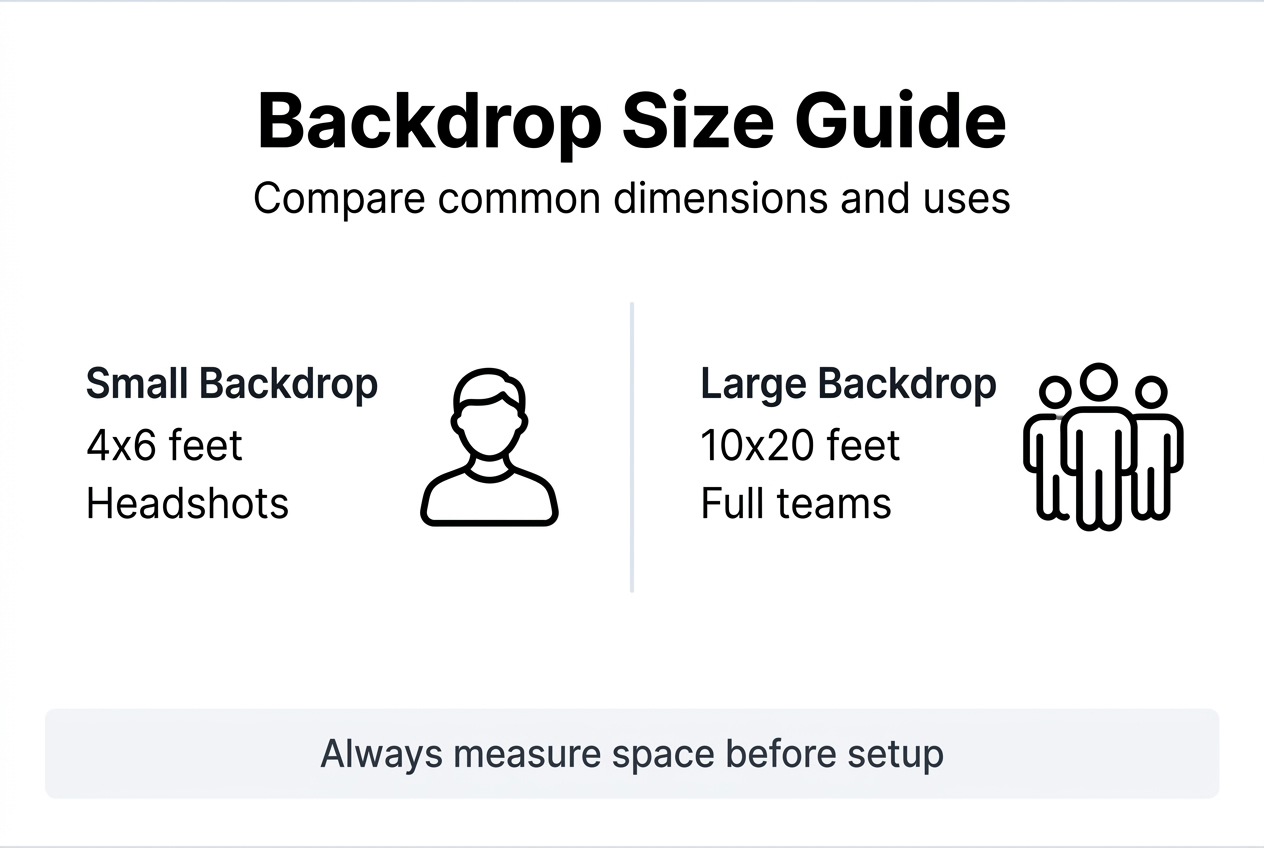
Medium backdrops offer the sweet spot for most professional work. They balance coverage and portability effectively, fitting standard studio spaces while providing enough background for creative framing. E-commerce sellers find 7x10 or 8x12 backdrops handle 90% of product photography needs without workspace complications.
Large backdrops deliver professional-grade results for demanding shoots:
- Full-body fashion photography requiring movement space
- Multi-subject group portraits needing wide coverage
- Lifestyle photography incorporating props and scene-building
- Commercial work demanding flawless background uniformity
Trade-offs include studio space requirements, storage challenges, and transport logistics. A 10x20 backdrop weighs significantly more than a 5x7 and requires careful rolling or folding to prevent creasing.
Pro Tip: Start with one medium backdrop for general work, then add specialized sizes as your shooting requirements become clearer through actual use.
Practical guidelines for choosing and using backdrop sizes
Follow these steps to select and manage backdrop sizes effectively:
- Measure your largest subject’s dimensions first, including any props or styling elements you regularly incorporate
- Add a minimum 20% size margin on all sides to prevent edge visibility and allow compositional flexibility
- Evaluate your studio space honestly, accounting for lighting equipment placement and photographer movement area
- Consider storage logistics before purchasing oversized backdrops that won’t fit your available space
- Plan for portability needs if you shoot on location or travel for client work
- Test with fabric or paper backdrops initially to confirm size requirements before investing in premium vinyl options
Choose backdrop size with intentional margin over your subject. Tight sizing creates constant edge management problems that slow shooting and limit creative options. Large size backdrops boost both creativity and efficiency by removing framing constraints.
Studio space dictates maximum practical backdrop dimensions. Measure wall-to-wall distance, then subtract 3 feet for lighting stands and equipment. That remainder represents your realistic maximum backdrop width.
Opt for durable, stain-resistant vinyl for frequently used large backdrops. Vinyl withstands repeated rolling, resists spills and stains, and maintains vibrant color reproduction better than paper or fabric alternatives. The initial cost premium pays off through extended usability and consistent results.
Pro Tip: Create a simple spreadsheet tracking your most common subjects and their ideal backdrop sizes to streamline future purchasing decisions and rental planning.
The impact of backdrop size on post-production and image quality
Larger backdrops allow more cropping and reframing flexibility during editing. Capture images with generous background coverage and you can adjust composition, straighten horizons, or experiment with different aspect ratios without running into visible edges. This editing freedom accelerates workflow and improves final presentation quality.
Proper size reduces visible edges in final images, eliminating the need for:
- Content-aware fill to extend inadequate backgrounds
- Clone stamp work repairing edge shadows and transitions
- Awkward crops that compromise intended composition
- Time-consuming masking and background replacement
Adequate background space improves professional appearance dramatically. Clients notice when backdrops feel cramped or when subjects sit uncomfortably close to visible borders. Generous sizing signals attention to detail and production value that justifies premium pricing.
Choosing correct backdrop size cuts editing time substantially. Process 50 product images shot on properly sized backdrops and you’ll save hours compared to fixing undersized background problems. That time savings translates directly to increased capacity and profitability.
Backdrop size also affects image consistency across product lines or portrait series. Shoot everything on consistent, appropriately sized backgrounds and your portfolio displays unified visual branding. Mix inadequate sizes and your work appears disjointed and unprofessional. Backdrops that enhance product shots share one common trait: they’re sized generously enough to fade into invisible support rather than competing for visual attention.
Discover your perfect backdrop size with Instant Backdrops
Now that you understand how backdrop dimensions shape photography outcomes, explore options that match your specific needs. Instant Backdrops offers professional vinyl backdrops in multiple sizes, from compact 5x7 options perfect for product detail shots to expansive 10x12 backdrops that handle full-body fashion photography effortlessly.
Their ultra-realistic, stain-resistant vinyl simplifies achieving professional framing and lighting control. Choose the right backdrop size and you’ll save setup time, improve compositional flexibility, and deliver consistently polished results that strengthen your visual storytelling. Browse sizing options at Instant Backdrops to find backdrops that fit your studio space, shooting style, and creative vision perfectly.
FAQ
What size backdrop is best for product photography?
Medium backdrops measuring 7x10 feet balance coverage and workspace efficiency for most product photography. Smaller items like jewelry work fine on 5x7 backdrops, while larger products or lifestyle shots benefit from 8x12 dimensions.
Can a small backdrop produce professional-quality images?
Yes, small backdrops suit tightly cropped product shots beautifully. They’re highly portable and cost-effective but offer limited framing flexibility for wider compositions or full-subject captures.
How does backdrop size affect lighting and shadows?
Larger backdrops reduce edge shadows by providing more seamless background area for light to fall across evenly. Smaller backdrops concentrate shadows near edges, creating inconsistent lighting that complicates editing and reduces image quality.
What factors should I consider besides size when choosing a backdrop?
Evaluate material quality, durability, and stain resistance carefully, especially for frequently used backdrops. Studio space availability, storage capacity, and portability requirements matter as much as dimensions for practical workflow success.