







Benefits of vinyl backdrops for pro photography in 2026
Professional product photography demands backdrops that deliver both visual excellence and practical durability. Photographers constantly balance aesthetic quality with workflow efficiency, seeking materials that withstand repeated use while maintaining flawless appearance. Vinyl backdrops have emerged as a preferred solution, offering superior longevity, reduced glare, and minimal maintenance compared to traditional paper or fabric alternatives. This article examines the key advantages of vinyl backdrops, providing expert insights and actionable guidance to help you optimize your studio setup and achieve consistently professional results in every shoot.
Table of Contents
- Durability And Cost-Effectiveness: Why Vinyl Backdrops Last Longer
- Minimizing Glare And Reflections For Flawless Product Shots
- Handling And Maintenance: Preserving Vinyl Backdrops’ Quality
- Comparing Vinyl Backdrops With Other Materials: Pros And Cons
- Explore High-Quality Vinyl Backdrops For Your Studio
- Frequently Asked Questions About Vinyl Backdrops
Key takeaways
| Point | Details |
|---|---|
| Durability advantage | Vinyl backdrops resist tears and stains far better than paper or fabric, reducing replacement costs |
| Glare reduction | Non-reflective vinyl surfaces minimize hotspots and unwanted reflections for clearer product details |
| Maintenance simplicity | Proper rolling and storage preserve vinyl quality, while simple cleaning extends lifespan |
| Material comparison | Vinyl balances durability and cost, though lighting management differs from fabric alternatives |
Durability and cost-effectiveness: Why vinyl backdrops last longer
Professional photographers need backdrops that survive the demands of commercial work. Vinyl backdrops offer superior durability compared to paper or fabric alternatives, making them cost-effective for professionals who shoot frequently. Paper tears easily under normal handling, while fabric stains permanently and develops wrinkles that require constant ironing. Vinyl resists both issues, maintaining its appearance through hundreds of shoots.
The economic advantage becomes clear over time. A single vinyl backdrop can replace dozens of paper rolls or multiple fabric options, reducing long-term supply costs significantly. Commercial photographers shooting products daily find vinyl’s reusability particularly valuable, as the material withstands repeated cleaning without degrading. This durability translates directly to lower operating expenses and fewer workflow interruptions.
Vinyl’s wrinkle resistance saves considerable preparation time before each shoot. Unlike fabric that requires steaming or ironing, vinyl typically needs only a quick wipe down. You can roll it out, secure it, and start shooting within minutes. This efficiency matters when client schedules are tight or you’re managing multiple sessions in one day.
Consider these specific durability advantages:
- Vinyl surfaces repel common spills like water, coffee, and light oils that would permanently stain fabric
- The material resists punctures and tears that destroy paper backdrops during product positioning
- Color fastness remains stable even after repeated cleaning, unlike fabric that fades
- Vinyl maintains its texture and appearance without the sagging or stretching fabric develops
Commercial shoots demand consistent results across multiple sessions. Vinyl delivers this reliability by maintaining identical appearance from the first shoot to the hundredth. Product catalogs requiring uniform backgrounds benefit enormously, as photographers can recreate exact lighting and color conditions months apart. Understanding what vinyl backdrops are helps you appreciate why this consistency matters for brand photography.
Pro Tip: Calculate your backdrop replacement costs over six months. Most professionals find vinyl pays for itself within 90 days compared to disposable paper, even accounting for the higher initial investment.
Minimizing glare and reflections for flawless product shots
Image quality separates amateur work from professional results, and backdrop reflections can ruin otherwise perfect shots. The non-reflective surface of vinyl backdrops minimizes glare and reflections, crucial for product photography focus. This characteristic helps photographers capture clean, distraction-free images that showcase product details without competing visual elements.
Vinyl’s matte finish absorbs light rather than bouncing it back toward the camera. This reduces hotspots that create overexposed areas and eliminates the mirror-like reflections glossy surfaces produce. Products with metallic finishes or glass components particularly benefit, as the backdrop won’t introduce competing highlights that confuse the viewer’s eye or require extensive retouching.
Post-processing time drops dramatically when you start with clean captures. Removing reflections and correcting glare in editing software consumes hours that could be spent shooting. Vinyl backdrops deliver camera-ready images that need minimal adjustment, allowing faster turnaround for client deliveries. This efficiency advantage compounds when you’re processing hundreds of product images for e-commerce catalogs.
Lighting management still requires attention, even with vinyl’s advantageous properties:
- Position key lights at angles that prevent direct reflection into the camera lens
- Use diffusers to soften light sources and reduce specular highlights on the backdrop
- Test exposures with your specific vinyl texture, as some patterns absorb light differently
- Monitor for edge reflections where the backdrop curves or meets the floor
Product textures and fine details emerge clearly against properly lit vinyl backgrounds. Jewelry photography benefits enormously, as gemstone facets and metal engravings remain sharp without backdrop glare competing for attention. Food photography similarly improves, with vinyl’s consistent surface allowing ingredients’ natural colors and textures to dominate the frame. Learning how to shoot on vinyl backdrops optimizes these quality advantages.
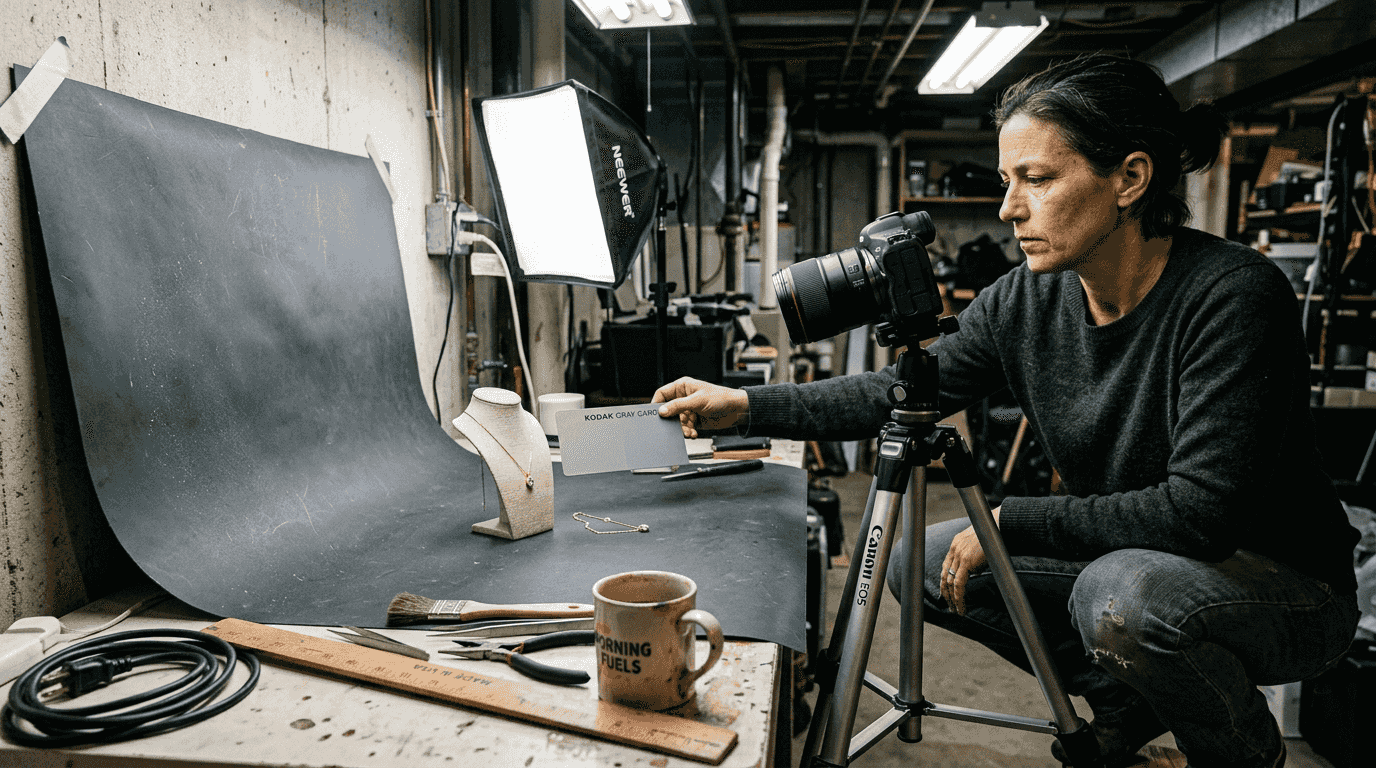
Pro Tip: Shoot test frames with a gray card against your vinyl backdrop under your standard lighting setup. This baseline helps you identify any reflection issues before the actual product shoot begins.
Handling and maintenance: Preserving vinyl backdrops’ quality
Proper care determines whether your vinyl backdrop lasts months or years. Vinyl backdrops require careful handling to avoid creases, which impact visual quality and can become permanent if left unaddressed. The material’s flexibility is both an advantage and a vulnerability, demanding specific storage and cleaning practices.
Rolling vinyl backdrops correctly prevents the creases that plague careless storage. Always roll with the printed side facing outward, creating gentle curves rather than sharp folds. This technique distributes stress evenly across the material, preventing the permanent crease lines that form when vinyl is folded or rolled too tightly. Store rolls vertically when possible, as horizontal storage can create flat spots where the roll contacts the floor.
Follow these essential handling steps:
- Clean the backdrop surface before rolling to prevent dirt from embedding during storage
- Use a backdrop stand or secure hanging system that supports the vinyl’s full weight evenly
- Allow vinyl to acclimate to room temperature before unrolling, especially after cold storage
- Smooth any minor wrinkles by hanging the backdrop for 24 hours before shooting
- Never drag vinyl across rough surfaces that could scratch or puncture the material
Cleaning methods directly affect vinyl longevity. Mild soap and water work for most spills, but harsh chemicals can damage the printed surface or cause discoloration. Test any cleaning solution on an inconspicuous edge first. Wipe gently rather than scrubbing, as aggressive cleaning can wear away the print layer over time. Dry thoroughly before rolling to prevent mildew growth in humid environments.
Environmental factors matter more than many photographers realize. Store vinyl in climate-controlled spaces away from direct sunlight, which fades colors and makes the material brittle. Extreme temperature swings cause expansion and contraction that can crack the surface. Humidity above 60% encourages mildew, while extremely dry conditions make vinyl stiff and prone to cracking.
Lighting during shoots requires management to avoid creating new reflection problems. Position lights to graze across the vinyl surface rather than hitting it head-on. This technique reveals texture in patterned backdrops while minimizing the specular highlights that can appear on vinyl’s smooth surface. Implementing a solid vinyl backdrop workflow streamlines these handling practices.
Pro Tip: Keep a microfiber cloth and spray bottle of diluted vinyl cleaner in your studio. Quick cleanup after each shoot prevents stains from setting and keeps your backdrop camera-ready.
Comparing vinyl backdrops with other materials: Pros and cons
Choosing the right backdrop material requires understanding how vinyl stacks up against alternatives. Each material serves specific needs, and the best choice depends on your shooting style, budget, and typical subjects. Vinyl excels in certain scenarios while paper or fabric proves superior in others.
Vinyl delivers unmatched durability but introduces lighting considerations. The material’s slight sheen can create reflections under strong lighting, which is less ideal than fabric for some uses. However, this same surface resists stains and tears that would destroy fabric backdrops. The trade-off becomes worthwhile when you factor in replacement costs and maintenance time over a year of regular shooting.
Paper backdrops offer the lowest initial cost but the highest long-term expense. A single tear or stain renders paper unusable, forcing constant replacement. Paper works well for photographers shooting varied backgrounds frequently, as the low cost makes experimentation affordable. However, commercial photographers shooting similar products repeatedly find paper’s disposable nature economically unsustainable.
Fabric provides excellent light absorption and a premium appearance but demands significant maintenance. Wrinkles form during storage and require steaming before every shoot. Stains penetrate fabric fibers permanently, and the material stretches over time, creating sagging that appears in wide shots. Fabric costs more than vinyl initially and requires ongoing care investments that add up quickly.
| Material | Durability | Cost Over Time | Maintenance | Best For |
|---|---|---|---|---|
| Vinyl | High resistance to tears and stains | Low due to reusability | Minimal cleaning, careful storage | Product photography, frequent commercial use |
| Paper | Tears easily, single-use | High due to constant replacement | None, disposable | Portrait sessions, varied backgrounds |
| Fabric | Stains permanently, stretches | Medium, requires replacement | High, needs ironing and careful cleaning | Fashion photography, premium portraits |
Product color influences backdrop material choice significantly. Dark products photograph best against light backgrounds that provide contrast, while light products need darker backdrops. Vinyl’s color consistency across its surface makes exposure calculations predictable. Fabric can show subtle color variations from weave patterns, and paper sometimes displays texture that competes with product details.
Shoot style determines which material advantages matter most. Studio photographers controlling all lighting variables can manage vinyl’s reflection characteristics easily. Location shooters needing portable, lightweight options might prefer fabric despite its maintenance demands. High-volume product photographers prioritize vinyl’s durability and quick setup over any minor lighting compromises.
Consider these material-specific factors:
- Vinyl works exceptionally well for food photography where spills are inevitable
- Fabric drapes naturally for fashion shots requiring elegant curves
- Paper provides the widest color selection for creative portrait work
- Vinyl’s printable surface allows custom designs that fabric can’t replicate as sharply
The editing benefits of vinyl backdrops extend beyond the shoot itself, as consistent backgrounds simplify batch processing and color correction across large product catalogs.
Explore high-quality vinyl backdrops for your studio
Professional photography demands backdrops that match your technical standards and creative vision. Premium vinyl backdrops combine the durability insights covered throughout this article with stunning visual designs that elevate product presentation. Whether you’re shooting jewelry, food, fashion, or lifestyle products, the right backdrop transforms ordinary images into compelling marketing assets.
Instant Backdrops offers professional-grade vinyl backdrops engineered specifically for commercial photography demands. Our collection features ultra-realistic textures, vibrant high-resolution prints, and spill-resistant surfaces that withstand the rigors of daily studio use. From classic marble and wood patterns to contemporary decorative walls, each backdrop delivers the consistent quality professional photographers require. Explore our curated collections and discover how premium vinyl backdrops streamline your workflow while enhancing every shot’s visual impact.
Frequently asked questions about vinyl backdrops
How to avoid wrinkles in vinyl backdrops?
Roll vinyl backdrops with the printed side facing outward and store them vertically to prevent creases. If wrinkles appear, hang the backdrop for 24 hours at room temperature, allowing gravity to smooth minor imperfections naturally. Never fold vinyl, as this creates permanent crease lines that appear in photos.
Can vinyl backdrops be used outdoors?
Vinyl backdrops work outdoors for short sessions but aren’t designed for prolonged outdoor exposure. Direct sunlight fades colors over time, and wind can damage improperly secured vinyl. Use outdoor shoots as occasional exceptions rather than regular practice to preserve your backdrop’s quality and appearance.
What cleaning methods are best for vinyl?
Clean vinyl backdrops with mild soap and water using a soft cloth, wiping gently to avoid damaging the printed surface. Test any cleaning solution on a small edge area first. Dry thoroughly before rolling to prevent mildew, and never use harsh chemicals or abrasive scrubbing that can wear away the print layer.
How do vinyl backdrops affect lighting setups?
Vinyl’s slight sheen requires angled lighting to minimize reflections, unlike fabric’s more absorbent surface. Position key lights to graze across the backdrop rather than hitting it directly, and use diffusers to soften any specular highlights. Review essential photography backdrop tips for detailed lighting strategies that optimize vinyl’s characteristics while maintaining image quality.