






Themed backdrops explained: elevate product photography
Plain white backgrounds have their place. But if every product image you shoot looks the same, you’re leaving real commercial value on the table. Themed backdrops give your images context, mood, and a visual story that plain surfaces simply can’t deliver. Whether you’re shooting artisan food, luxury skincare, or handcrafted jewelry, the right backdrop can shift how a viewer feels about a product in seconds. This guide walks you through what themed backdrops are, which materials and themes work best, and how to set them up for consistently strong results.
Table of Contents
- What is a themed backdrop?
- Popular types and common themes
- Materials: Fabric, vinyl, canvas, or paper?
- Matching themed backdrops to your brand story
- Practical setup: Distance, lighting, and photography tips
- Explore our themed backdrop collection
- Frequently asked questions
Key Takeaways
| Point | Details |
|---|---|
| Purpose of themed backdrops | Themed backdrops give context and enhance storytelling in professional photography. |
| Choosing the right material | Fabric, vinyl, canvas, and paper each offer distinct benefits for different needs and studio setups. |
| Brand alignment matters | Select themes that support your brand story while keeping focus on the product or subject. |
| Technical setup essentials | Maintain 3-6 ft subject distance and controlled lighting for clean, shadow-free images. |
What is a themed backdrop?
A themed backdrop is a printed or textured background built around a specific visual concept. It’s not just a color. It’s a setting. Think of a rustic wood surface for a farmhouse food brand, or a moody marble texture for a high-end cosmetics line. The theme creates context that helps the viewer understand the product’s world without a single word.
Themed backdrops serve three core functions in professional photography:
- Narrative context: They place the product inside a recognizable environment or mood.
- Brand consistency: Using the same themed backdrop across a product line creates a cohesive visual identity.
- Emotional cues: Seasonal or lifestyle themes trigger specific feelings, from warmth and comfort to luxury and sophistication.
As covered in themed photography backdrop basics, understanding how themes function is the first step toward using them strategically rather than decoratively.
“A backdrop isn’t just a background. It’s the environment your product lives in.”
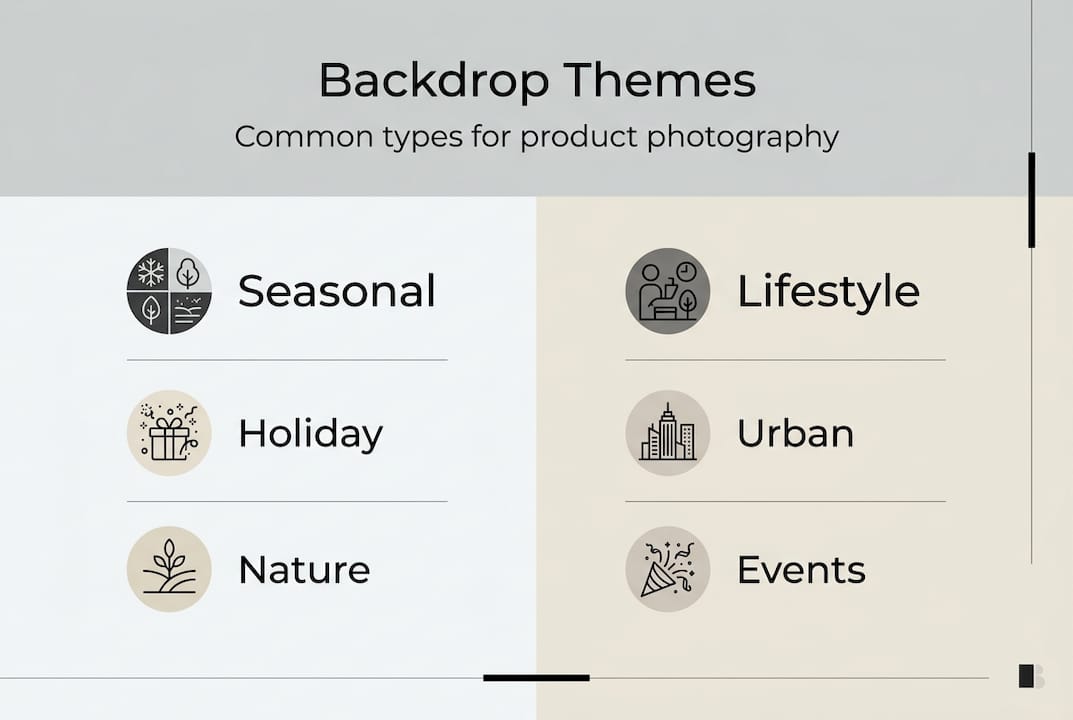
Common themes include holidays such as Christmas, Halloween, and Easter; nature settings like autumn leaves, florals, and wood grain; urban textures like brick and grunge; and event-specific designs for cake smashes, sports, and birthdays. Each category serves a different audience and shoot type.
Popular types and common themes
With the definition clear, you’ll want to know what themes are available and which ones work best for professional shoots. The range is wider than most photographers expect, and choosing the right category from the start saves time in post-production.
Common themes span holidays, nature, urban environments, and events, each with its own visual language and ideal use case. Here’s a side-by-side comparison to help you decide:
| Theme type | Best for | Mood | Photography genre |
|---|---|---|---|
| Holiday/seasonal | Gift, food, lifestyle | Warm, festive | E-commerce, social media |
| Wood/natural grain | Food, artisan products | Rustic, organic | Flat lay, editorial |
| Marble/stone | Jewelry, cosmetics | Luxurious, clean | Product, beauty |
| Brick/urban | Fashion, streetwear | Edgy, raw | Lifestyle, lookbook |
| Abstract/minimal | Tech, stationery | Modern, sleek | Commercial, catalog |
For photography backdrop ideas that go beyond the basics, it helps to think in terms of your product’s personality rather than just its category.
Here are the top five application styles where themed backdrops consistently deliver strong results:
- Flat lay product photography using textured surfaces like marble or linen.
- Lifestyle imagery with seasonal or environmental themes that suggest real-world use.
- Event photography such as cake smashes or milestone portraits with celebratory themes.
- E-commerce listings where a consistent themed background builds brand recognition across a catalog.
- Social media content where bold, visually distinct themes stop the scroll.
For backdrop styling inspiration that matches your specific genre, exploring curated collections by shoot type is a smart starting point.
Materials: Fabric, vinyl, canvas, or paper?
Once you’ve chosen a theme, considering the right material ensures your setup truly delivers professional results. Each material behaves differently under light, handles differently on set, and suits different types of shoots.
| Material | Light behavior | Durability | Portability | Best use | |—|—|—|—| | Fabric | Absorbs light, reduces glare | Moderate | High | Portraits, lifestyle | | Vinyl | Slight sheen, easy to wipe | High | Medium | Food, product, flat lay | | Canvas | Matte, tactile texture | Very high | Low | Studio, fine art | | Paper | Clean, no texture | Low (disposable) | High | Cosmetics, food |
For product photography, fabric is often preferred for its light-absorbing quality; canvas lasts a decade or more in studio conditions; and paper is the go-to for the cleanest, most disposable look. Vinyl sits in a practical middle ground, offering durability and easy cleanup without sacrificing print quality.

The backdrop materials guide breaks down each option in more detail, including how surface finish affects color accuracy in high-resolution shots.
When choosing backdrop material, always factor in your studio environment. A high-humidity space, for example, can warp paper and cause fabric to wrinkle, making vinyl a more reliable choice.
Pro Tip: For food or cosmetics shoots, use paper or vinyl backdrops. Oil, pigment, and liquid spills are inevitable, and a surface you can wipe clean or replace cheaply protects your investment.
Matching themed backdrops to your brand story
With different materials and themes in mind, let’s align your choices for maximum branding and narrative impact. This is where many photographers make their biggest mistake: choosing a theme they personally love rather than one that serves the product.
The backdrop should complement, not overshadow, the product. That principle sounds simple, but it’s easy to break when a beautiful backdrop catches your eye. Here are the best practices for integrating themes effectively:
- Mirror the product’s color palette to create visual harmony without competition.
- Match the season or occasion when shooting time-sensitive campaigns.
- Use texture to suggest quality. A marble backdrop implies premium value. A rough wood surface implies handcrafted authenticity.
- Keep busy themes for lifestyle shots and reserve cleaner, simpler backgrounds for close-up product detail.
- Repeat the same backdrop across a product line to build a recognizable visual identity.
“Avoid over-theming in commercial work. Let the product remain the star.”
The backdrop visual impact of a well-chosen theme is measurable. Buyers respond to images that feel intentional. A mismatched backdrop, even a beautiful one, creates visual noise that pulls attention away from what you’re selling.
For product photography background types that balance theme with clarity, simpler is almost always stronger in commercial contexts. And for backdrop for lifestyle shoots, richer themes with more environmental detail tend to perform better because the goal is immersion rather than isolation.
Pro Tip: Before committing to a themed backdrop for a full shoot, take a test shot with the backdrop and one without. Compare them side by side. If the backdrop version doesn’t clearly improve the image, simplify the theme.
Practical setup: Distance, lighting, and photography tips
With branding and style set, technical setup is the next essential step for consistent professional-quality results. Even the best backdrop can underperform if the lighting or subject placement is off.
Follow these steps for a clean, professional setup every time:
- Position the backdrop flat and wrinkle-free. Any creases will catch light and appear in your final image, especially on vinyl or paper.
- Place your subject 3 to 6 feet from the backdrop. This subject distance is the standard for preventing unwanted shadows from falling onto the background.
- Light the backdrop separately from the subject when possible. This gives you independent control over how much the theme shows versus how much it recedes.
- Angle your key light at 45 degrees to the subject to minimize harsh shadows without flattening the image.
- Check for color casts. Printed backdrops, especially warm-toned ones, can reflect color onto your subject. Adjust white balance in-camera or correct in post.
- Keep the theme contextually relevant. A beach-themed backdrop behind a winter skincare product creates confusion, not atmosphere.
For more backdrop photography tips on managing light and shadow in studio setups, reviewing your full lighting workflow alongside your backdrop choice is always worth the time.
For lifestyle photography backdrop tips specifically, the rules shift slightly. You can allow more ambient light and softer shadows because the goal is a natural, lived-in feel rather than clinical precision.
Pro Tip: After every setup change, review your shots at 100% zoom on your monitor. Hotspots, color casts, and soft focus caused by backdrop reflections are much easier to catch before you wrap the shoot than in post-production.
Explore our themed backdrop collection
If you’re ready to move beyond plain backgrounds, we’ve built a collection designed specifically for professional photographers and content creators who need backdrops that perform as well as they look. Every backdrop at Instant Backdrops is printed in high resolution on durable, stain-resistant vinyl, so it holds up through food shoots, cosmetics sessions, and everything in between.
Our range covers marble, wood, stone, brick, seasonal themes, and more. Each one is sized for real studio use and built to stay vibrant through repeated shoots. Whether you need a single statement backdrop or a curated bundle for a full product catalog, you’ll find options that match your brand’s visual language. Browse the full collection at Instant Backdrops and find the backdrop that lets your products shine.
Frequently asked questions
Can themed backdrops distract from the product?
Yes, if the theme is too busy or unrelated to the product, it pulls focus away from what matters. Choose subtle, contextually relevant themes and avoid over-theming in commercial shoots to keep the product front and center.
Which material is best for long-term studio use?
Canvas is the top choice for longevity, often lasting over a decade in controlled studio environments. Vinyl is a strong second option for shoots that involve food, liquids, or frequent handling.
How far should my subject be from the backdrop?
Keep a 3 to 6 foot distance between your subject and the backdrop. This prevents shadows from the subject falling onto the background and keeps the theme looking clean and intentional.
Are certain themes better for lifestyle vs. product images?
Lifestyle images can carry richer, more detailed themes because the goal is immersion. Product-focused images work best with simpler, cleaner backgrounds that match the brand story without competing with the product itself.