






Backdrop material quality: how to choose for professional photos
You’ve set up your lights, arranged your products perfectly, and fired the shutter. Then you review the images and notice it: a distracting glare across the background, a visible crease cutting through the frame, or a washed-out tone that kills the mood. The culprit is rarely your camera or your lighting. Most of the time, it’s the backdrop. Non-reflective, durable materials are essential for consistent professional results, yet backdrop material quality remains one of the most overlooked decisions in studio setup. This guide breaks down what quality really means, which materials perform best, and how to match your choice to your specific photography goals.
Table of Contents
- What does backdrop material quality really mean?
- Key factors that define high-quality backdrops
- Material comparison: which backdrop type fits your needs?
- Expert techniques for evaluating and maximizing backdrop quality
- Matching backdrop quality to your photography goals
- Upgrade your workflow with pro-grade backdrops
- Frequently asked questions
Key Takeaways
| Point | Details |
|---|---|
| Non-reflective wins | Choose non-reflective materials for consistent, professional lighting and minimal edits. |
| Select for durability | Opt for materials that resist wear and are easy to maintain for studios or e-commerce. |
| One size doesn’t fit all | Match the backdrop material quality to your specific type of shoot for best results. |
| Proper care matters | Maintaining your backdrop extends its life and keeps your images consistently sharp. |
What does backdrop material quality really mean?
Backdrop quality is not just about how a material looks in a product photo online. It covers a range of physical and functional properties that affect every shoot you do. Understanding these properties helps you avoid costly mistakes and spend less time fixing images in post.
At its core, backdrop materials explained quality includes:
- Durability: How well the material holds up after repeated use, rolling, and cleaning
- Weight and thickness: Heavier materials resist creasing and lay flat more easily
- Surface finish: Whether the material reflects light or absorbs it evenly
- Wrinkle resistance: Critical for clean, consistent backgrounds without retouching
- Cleaning requirements: Some materials wipe clean in seconds; others need careful handling
- Color stability: High-quality materials maintain accurate tones shoot after shoot
Poor quality shows up fast. Wrinkles appear under studio lights. Glossy surfaces create hot spots that draw the eye away from your subject. Colors shift after a few washes. All of this adds editing time and reduces the professionalism of your final images.
“Photographers should avoid vinyl sheen in dark prints and prioritize non-reflective surfaces for even, controlled lighting.”
The bottom line: quality backdrop material gives you a reliable, repeatable foundation. It lets your products or subjects shine without the background competing for attention.
Key factors that define high-quality backdrops
With a baseline understanding of quality, you’ll need to know which features to assess in real-world backdrop options. Not all materials are built the same, and the differences matter more than most photographers expect.
Here are the key factors to evaluate before you buy:
- Surface finish: Non-reflective surfaces are best for even lighting. Glossy finishes create unwanted glare, especially under continuous or strobe lights. Microfiber and polyester are durable and non-reflective, making them excellent for studio use.
- Material thickness: Thicker backdrops resist creasing and last significantly longer. Thin materials may look fine at first but degrade quickly under regular studio conditions.
- Texture: Smooth surfaces work best for product and jewelry photography. A slight texture adds depth for portraits and fashion work without distracting from the subject.
- Maintenance ease: Some materials, like vinyl, wipe clean with a damp cloth. Others, like muslin, need washing or steaming. Know what you’re committing to before you invest.
- Color fidelity: Premium materials hold their tone accurately after repeated use. Budget options often fade or shift, making color matching across a catalog nearly impossible.
When choosing the right backdrop, always factor in how often you’ll use it and what type of subjects you’ll be shooting. A backdrop that works beautifully for food photography may not perform as well for dark jewelry.

Pro Tip: Steam fabric backdrops before every shoot to eliminate creases. Even minor wrinkles become very visible under studio lights and add unnecessary retouching time.
Material comparison: which backdrop type fits your needs?
Now that you know what to look for in quality, let’s compare the most popular materials so you can match them to your needs.
| Material | Durability | Reflectivity | Maintenance | Best use case |
|---|---|---|---|---|
| Vinyl | Very high | Low to medium | Wipe clean | E-commerce, product, food |
| Polyester | High | Low | Machine wash | Studio portraits, fashion |
| Muslin | Medium | Very low | Wash and steam | Creative portraits, lifestyle |
| Seamless paper | Low | Very low | Disposable | High-volume catalog shoots |
| Canvas | High | Low | Spot clean | Fine art, painted backdrops |
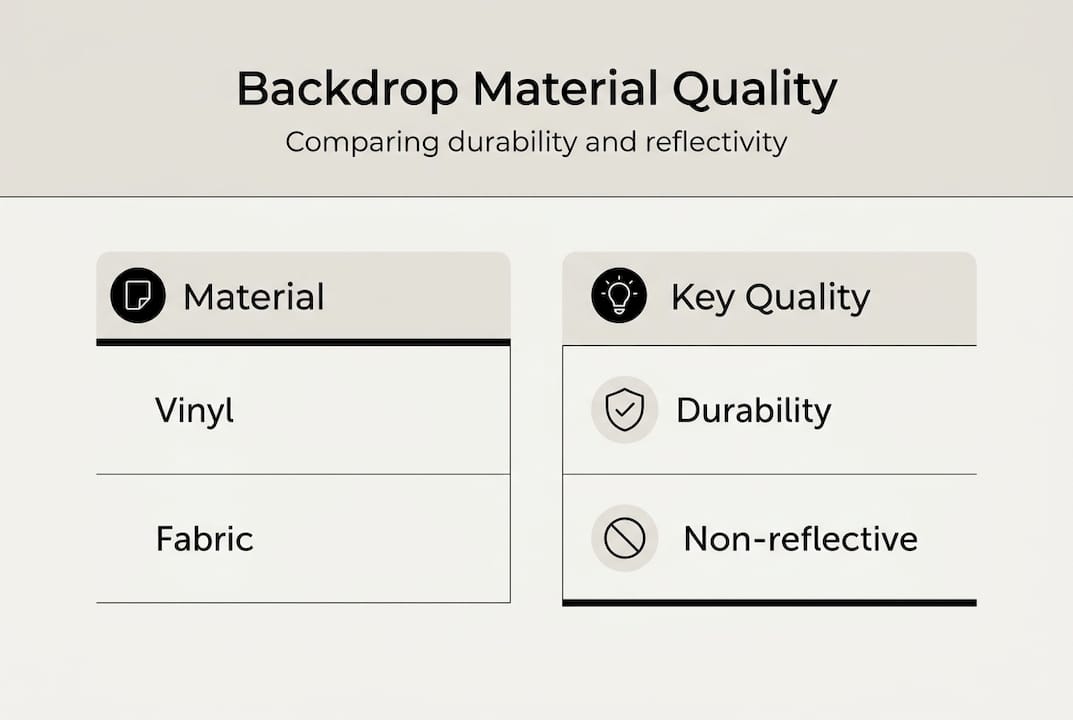
Paper is ideal for clean, high-volume shoots where you need a fresh surface every time. Vinyl is durable for studios that need a long-lasting, easy-to-clean option. Understanding vinyl backdrop benefits helps you see why it’s the go-to choice for e-commerce sellers who shoot daily.
When reviewing product background types, keep these common pairing mistakes in mind:
- Using glossy vinyl for dark or reflective objects like black electronics or jewelry
- Choosing seamless paper for outdoor or high-traffic shoots where it tears easily
- Pairing textured muslin with small product flat lays where texture competes with the subject
- Using canvas for food photography where spills and stains are likely
- Selecting thin polyester for close-up shots where wrinkles become very visible
Matching material to subject type is one of the fastest ways to improve your image quality without changing any other part of your setup.
Expert techniques for evaluating and maximizing backdrop quality
To get the most mileage and best results from your chosen material, here’s how experienced photographers approach testing and care.
- Run a reflectivity test: Set up your studio lights at their normal angle and position the backdrop as you would for a real shoot. Look for hot spots or sheen. If you see glare, the surface is too reflective for that lighting setup.
- Spot-check for damage: Before every shoot, inspect the backdrop for wrinkles, small tears, or staining. Catching these early saves you from discovering them mid-shoot or in post.
- Clean by material type: Vinyl wipes down with a damp cloth and mild soap. Fabric backdrops need washing or steaming. Proper backdrop care preserves quality and minimizes post-shoot cleanup, with vinyl users reporting up to 60% less cleanup time compared to fabric alternatives.
- Store correctly: Roll vinyl backdrops rather than folding them to prevent permanent crease lines. Store fabric backdrops flat or loosely rolled in a dry space.
- Use a color reference card: Place a standard color checker card in your first frame of each session. This gives you a reliable reference point for color correction and keeps your catalog consistent across different shoots.
Pro Tip: When shooting dark products on vinyl, always diffuse your light source. A softbox or diffusion panel reduces the chance of sheen appearing on the backdrop surface, keeping the focus on your subject.
Understanding the importance of realistic backdrops also plays a role here. A backdrop that looks convincingly real in the final image reduces the need for heavy compositing or background replacement in editing.
Matching backdrop quality to your photography goals
The best backdrop material is the one that aligns with your specific photography needs, not just general quality standards. Different shoot types demand different material properties.
| Photography type | Recommended material | Key quality priority |
|---|---|---|
| E-commerce product | Vinyl | Easy cleaning, color accuracy |
| Food and beverage | Vinyl or textured paper | Stain resistance, realistic texture |
| Fashion and apparel | Polyester or muslin | Non-reflective, wrinkle-resistant |
| Jewelry and accessories | Smooth vinyl or paper | Minimal texture, no glare |
| Portraits and lifestyle | Muslin or canvas | Depth, natural texture |
Different materials excel for portrait, product, and high-volume catalog shoots, so matching material to purpose is not optional. It’s the foundation of a reliable workflow.
Here’s a quick checklist to guide your decision:
- For e-commerce: prioritize durability, easy cleaning, and color consistency
- For creative shoots: prioritize texture, depth, and visual interest
- For high-volume work: prioritize speed of setup, cleanup, and material longevity
Watch for these red flags that signal low quality for your application:
- Visible sheen under standard studio lighting
- Colors that look different in person versus in the final image
- Creases that don’t steam or roll out after storage
- Material that tears, peels, or fades after minimal use
- Thin construction that shifts or bunches during a shoot
Understanding the backdrop’s role in product photography makes it clear that the background is never just a background. It’s an active part of your image quality.
Upgrade your workflow with pro-grade backdrops
Choosing the right backdrop material simplifies everything. You spend less time retouching, less time managing glare, and more time focused on the creative work that matters. When your background is reliable, your entire workflow becomes more efficient.
At Instant Backdrops, we’ve built our entire range around the quality standards covered in this guide. Our vinyl backdrops are non-reflective, stain-resistant, and designed to hold up under daily studio use. Whether you shoot food, jewelry, fashion, or e-commerce products, you’ll find curated options that match your exact needs. Browse our collections and see how the right backdrop can transform your results from the very first shot.
Frequently asked questions
How can I tell if a backdrop is high quality before buying?
Check for durability, non-reflective finish, easy maintenance, and strong customer reviews or studio recommendations. Surface finish and material reviews are reliable indicators of real-world performance.
Is vinyl or fabric better for product photography?
Fabric offers non-reflective consistency, while vinyl is more durable and easier to clean for high-volume work. Vinyl and fabric excel in different aspects depending on your shoot frequency and subject type.
Do non-reflective backdrops really make a difference?
Yes. They prevent glare and keep your products or subjects as the clear focus, especially under studio lights. Non-reflective surfaces minimize glare and deliver more consistent results for e-commerce imagery.
How do I care for and store high-quality backdrops?
Store flat or rolled, clean after each shoot, and steam fabric backdrops to keep them shoot-ready. Proper care like cleaning and steaming preserves material quality and extends the life of your investment significantly.