








Explaining themed backdrops: boost product photography impact
TL;DR:
- Themed backdrops enhance product storytelling and increase consumer engagement.
- They can boost conversion rates by up to 40%.
- Proper selection and setup of backdrops improve photo quality and brand consistency.
Themed backdrops can be the difference between a product image that scrolls past unnoticed and one that stops a buyer cold. Styled images lift conversions by 15 to 40%, and 93% of consumers say visuals are the top factor in their purchase decisions. Yet many photographers and e-commerce sellers still treat backgrounds as an afterthought. They reach for a plain white sheet or a neutral gray card and wonder why their photos feel flat. This guide breaks down exactly what themed backdrops are, how to choose and use them, and what the data says about their real impact on sales and audience engagement.
Table of Contents
- What are themed backdrops in product photography?
- Choosing the right themed backdrop: Materials, sizes, and styles
- Common challenges and expert solutions
- Proven impact of themed backdrops on sales and engagement
- Why maximizing themed backdrops means thinking beyond trends
- Enhance your product photos with premium themed backdrops
- Frequently asked questions
Key Takeaways
| Point | Details |
|---|---|
| Story-driven impact | Themed backdrops set the scene and connect products to stories that boost engagement. |
| Material matters | Choosing the right backdrop material prevents unwanted reflections and enhances image quality. |
| Empirical proof | Themed backdrops can raise conversion rates by up to 40 percent for e-commerce photography. |
| Strategic application | Using appropriate backdrops for platform rules ensures compliance and maximizes visual impact. |
What are themed backdrops in product photography?
With the introduction setting the stage, let’s get into what themed backdrops truly are and what sets them apart from a standard plain background.
Themed backdrops in product photography are printed or textured backgrounds featuring patterns like scenic views, wood grain, marble slabs, or seasonal motifs. Unlike plain seamless paper, they provide context and visual storytelling that connects a product to a lifestyle, mood, or setting. A plain white background isolates. A themed backdrop situates.
Think about a artisan candle photographed on a rustic wood surface versus on a white sweep. The wood tells a story: warmth, craftsmanship, home. The white tells nothing. That narrative layer is exactly what themed backdrops add to your product shots.
Common themed backdrop examples include:
- Wood grain textures (light oak, dark walnut, reclaimed timber)
- Marble and stone surfaces (white Carrara, black granite, travertine)
- Seasonal patterns (autumn leaves, holiday settings, spring florals)
- Decorative walls (brick, plaster, painted panels)
- Abstract gradients and color washes
Here’s a quick comparison of themed versus plain backgrounds:
| Feature | Themed backdrop | Plain background |
|---|---|---|
| Storytelling | Strong | Minimal |
| Brand personality | High | Low |
| Versatility | Moderate | Very high |
| Visual engagement | High | Low to moderate |
| Setup complexity | Low to moderate | Very low |
As one industry resource puts it: “Themed backdrops provide context and storytelling for e-commerce products, contrasting with plain seamless ones.” That context is what makes a buyer feel something before they even read the product description.
Understanding the different background types available helps you make smarter decisions for each shoot. Themed options are not just decorative. They are strategic tools that shape how a buyer perceives your product’s quality, price point, and intended use.
Choosing the right themed backdrop: Materials, sizes, and styles
Knowing what themed backdrops are, it’s crucial to understand how to select the right one for your specific project.
Material is your first decision. Each option has real trade-offs depending on your shooting style and subject matter.
| Material | Best for | Key advantage | Watch out for |
|---|---|---|---|
| Vinyl | Food, product, jewelry | Spill-proof, easy to clean | Can show minor creases |
| Canvas | Fashion, lifestyle | Rich texture, premium feel | Harder to wipe clean |
| Microfiber | Flat lays, small items | Soft, wrinkle-resistant | Less durable over time |
For most product and food photographers, professional backdrop materials like vinyl are the practical choice. They handle spills, resist stains, and print with sharp, vibrant detail that holds up even in close-up macro shots.
Follow these steps to set up your themed backdrop correctly:
- Size your backdrop to at least twice the product’s dimensions. A small item on a large print can look lost, but a backdrop that’s too small creates awkward cropping.
- Mount on a stand or roller system with a gentle sweep under the product. This eliminates the hard line where the vertical and horizontal surfaces meet.
- Light your backdrop separately from your product. Position key lights at roughly 45 degrees to the surface to reveal texture without harsh shadows.
- Test your angles before shooting. Shoot a few test frames and check for unwanted reflections or color casts from the backdrop.
Pro Tip: For food photography, always choose a matte vinyl over glossy finishes. Glossy surfaces catch overhead lights and create distracting hotspots that pull the eye away from the dish.
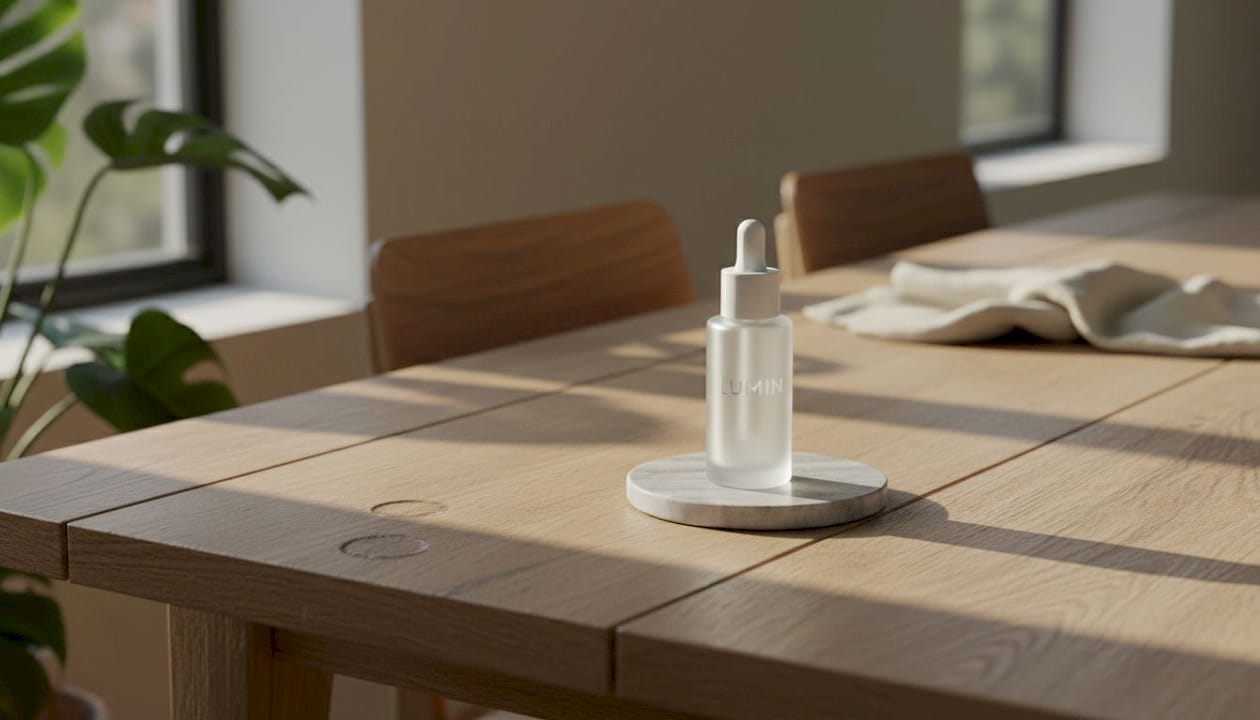
Style compatibility matters too. A sleek, modern skincare product looks natural on a cool gray marble. That same product on a warm, distressed wood backdrop creates visual tension. Match the backdrop’s mood to the product’s brand personality. When in doubt, neutral tones with subtle texture are the safest starting point. Learning how to elevate product photography starts with getting this pairing right.
Common challenges and expert solutions
Once you’ve chosen your backdrop, real success depends on handling the technical details that can make or break the final image.
Even experienced photographers run into predictable problems with themed backdrops. Knowing them in advance saves you time and frustration.
The most common challenges and how to fix them:
- Glare and reflections on glossy products. Jewelry, glass bottles, and polished metal surfaces reflect everything. Reflective products need matte textures to cut glare. Choose a matte canvas or microfiber backdrop and use diffused lighting.
- Distraction from busy patterns. A highly detailed backdrop can compete with a small product. Scale matters. If your item is small, choose a subtle, low-contrast texture rather than a bold pattern.
- Backdrop creasing. Vinyl can crease during shipping or storage. Roll it loosely, store it vertically, and use a heat gun on low from a safe distance to relax any stubborn folds.
- Inconsistent color across shoots. If you’re building a product catalog, use the same backdrop and lighting setup each time. Inconsistency breaks the visual cohesion of your brand page.
- Platform compliance issues. This is a big one for e-commerce sellers. Amazon requires a white main image for primary listings, but themed backdrops are perfectly suited for secondary lifestyle images.
Pro Tip: Build a simple shot list that includes your platform requirements before you set up your backdrop. Knowing you need one clean white-background shot and two lifestyle shots saves you from breaking down your setup and starting over.
For e-commerce sellers using backdrops, the key is treating themed backgrounds as part of a larger visual system, not a one-off creative choice. Your secondary images are where themed backdrops do their best work, building the emotional case for purchase after the compliant main image has drawn the click. A solid e-commerce photography guide will always emphasize this layered approach.
Proven impact of themed backdrops on sales and engagement
With the right technical execution in place, here’s what themed backdrops can actually do for your sales numbers and visual presence.
The data is clear and consistent. Visuals are not a nice-to-have in e-commerce. They are the primary driver of buyer behavior.
“93% of consumers say visuals are the deciding factor in a purchase decision. Styled and themed product images lift conversion rates by 15 to 40% compared to plain backgrounds.”
That’s a significant range, and the upper end is not an outlier. It reflects what happens when a themed backdrop is paired with the right product, lighting, and composition.
Here’s how themed backdrops drive measurable results:
- They establish brand emotion immediately. A buyer forms a first impression in milliseconds. A marble backdrop signals premium. A warm wood surface signals artisan or organic. That emotional cue shapes willingness to pay.
- They increase time-on-page. Visually interesting images hold attention longer, which signals quality to platform algorithms and increases the chance of a sale.
- They reduce return rates. When a product is shown in a realistic, styled context, buyers have clearer expectations. Fewer surprises at delivery means fewer returns.
- They support brand consistency. Using a signature backdrop style across your catalog creates visual recognition. Buyers start to associate your aesthetic with quality.
The realistic backdrop impact on conversion is especially strong in categories like food, skincare, jewelry, and home goods, where lifestyle context directly influences perceived value. One well-documented case involved a luxury watch brand that saw conversions rise 28% after switching from plain white backgrounds to gradient-styled backdrops for their secondary images. The product did not change. Only the visual context did.
That’s the real power of a themed backdrop. It’s not decoration. It’s persuasion.
Why maximizing themed backdrops means thinking beyond trends
Here’s something we see often: photographers and sellers invest in a trending backdrop, use it for a season, and then feel like their images look dated. They blame the backdrop. The real issue is that they chose it for the trend, not for their brand.
Trending patterns create a short-term visual lift but a long-term sameness problem. When every skincare brand shoots on the same pink terrazzo surface, the backdrop stops differentiating and starts blending in. The best results come from choosing themed backdrops that reflect a genuine brand story, not just what’s popular on social media this month.
We’ve seen this play out consistently in high-performing campaigns. The brands that get the strongest ROI from their backdrop investment are the ones that ask: “Does this background reflect who we are?” rather than “Is this what everyone is using right now?”
Experimenting with less common themes, like aged concrete, linen textures, or hand-painted surfaces, often produces more distinctive results. These choices feel intentional and specific, which communicates quality and care to the buyer. Explore backdrop styling ideas that go beyond the obvious to find options that genuinely fit your visual identity. The goal is not to look current. It’s to look like you.
Enhance your product photos with premium themed backdrops
Ready to put everything you’ve learned into practice? The right backdrop makes every shoot more efficient and every image more compelling.
At Instant Backdrops, you’ll find a wide selection of professionally designed vinyl backdrops built for product, food, jewelry, and lifestyle photography. Every backdrop is printed in high resolution, made from spill-proof vinyl, and sized to work for both flat lays and upright setups. Whether you need a classic marble surface, a warm wood grain, or a textured stone finish, the collection covers the styles that perform best in real e-commerce shoots. Browse the full range and find the themed backdrop that fits your brand story.
Frequently asked questions
What makes a backdrop ‘themed’ in product photography?
A themed backdrop features printed or textured patterns, like wood or marble, designed to tell a story or set visual context for the product, unlike plain seamless backgrounds.
Do themed backdrops improve conversion rates?
Yes. Styled backgrounds lift conversions by 15 to 40% in product photography, according to industry data, making them a direct contributor to e-commerce sales performance.
Which backdrop material is best for eliminating reflections?
Matte canvas or microfiber themed backdrops are the best choice for reflective products because they reduce glare effectively compared to glossy vinyl surfaces.
Can I use themed backdrops for Amazon product listings?
Yes, but only for secondary images. Amazon’s main image policy requires a pure white background for the primary listing photo, while themed backdrops are fully compliant for supporting lifestyle images.
What’s the best way to mount a themed backdrop for seamless results?
Use a backdrop stand or roller system and let the backdrop sweep under the product to create a smooth, seamless curve that eliminates visible lines or creases in the final image.