



What is a portable backdrop? Essential guide for pro shoots
TL;DR:
- Portable backdrops include various formats like roll, collapsible frame, and flat lay surfaces.
- Material choices such as vinyl, fabric, or paper impact durability, setup, and photo quality.
- The right backdrop enhances workflow efficiency and overall image professionalism.
Portable backdrops look simple from the outside. You see one at a trade show or a product shoot, and it seems like a straightforward piece of equipment. But ask five professional photographers what counts as a “portable backdrop,” and you’ll get five different answers. Some think it means a collapsible frame. Others picture a roll of seamless paper on a lightweight stand. A few might describe a vinyl flat lay surface folded into a bag. That confusion is exactly why this guide exists. We’re breaking down every key format, material, and setup consideration so you can make the right call for your shoots.
Table of Contents
- Defining portable backdrops: more than just a background
- Types of portable backdrops: comparing formats and functions
- Materials that matter: choosing the right portable backdrop
- Portable backdrops in action: real-world setups and pro tips
- Why most photographers overlook the real value of portable backdrops
- Explore professional portable backdrops for your next shoot
- Frequently asked questions
Key Takeaways
| Point | Details |
|---|---|
| Portable backdrop defined | A portable backdrop is both the background material and its support system, designed for easy transport and varied professional use. |
| Format and material matter | Your photography needs—space, subject, frequency—should guide whether you pick a roll, collapsible, or hybrid backdrop and which material fits best. |
| Smart selection saves time | Matching the right portable backdrop to your workflow streamlines setup, improves creative control, and boosts professional results. |
| Quality impacts images | Investing in durable, photography-grade materials ensures consistent lighting and image quality in every shoot. |
Defining portable backdrops: more than just a background
The term “portable backdrop” gets used loosely, and that looseness causes real problems when you’re trying to buy or set up the right gear. A portable backdrop isn’t just the background surface itself. It’s the full system: the backdrop material plus whatever support structure makes it usable on location or in a mobile studio.
To be genuinely portable, a backdrop system needs to meet a few basic criteria. It should pack down small enough to transport easily, set up quickly without a full crew, and work reliably across different environments. That last point matters more than most people realize. A backdrop that performs beautifully in a controlled studio can fail completely in a bright outdoor setting or a cramped hotel room.
There are two primary formats you’ll encounter as a working photographer:
- Stand-mounted roll backdrops: These use a support stand (typically a crossbar with two upright poles) to hold a roll of seamless paper, fabric, or vinyl. The roll can be lowered to create a sweep from wall to floor. They’re common in portrait and fashion photography.
- Self-supporting or collapsible frame backdrops: These are pre-tensioned or spring-loaded frames that hold a printed or solid background. They fold flat for transport and pop open in seconds. You’ll see these at events, trade shows, and quick location shoots.
- Flat lay vinyl and fabric boards: These don’t hang at all. They lie flat on a surface and are used primarily for product, food, and jewelry photography. They fold or roll into a small package and set up instantly.
As noted in this best backdrops for photography guide, not all “portable backdrops” are the same. Some are portable stands designed for seamless paper or fabric rolls, while others are self-supporting collapsible frames, each with distinct advantages depending on the shoot.
“Understanding the format of your backdrop system before you buy is as important as choosing the color or texture. The wrong format can cost you time and money on every shoot.”
Choosing the right backdrop also depends heavily on your typical shooting environment. A studio photographer who occasionally shoots on location has different needs than a content creator who shoots entirely in the field. Knowing where you’ll use your backdrop most often is the first question to answer.
Setup speed and transportation logistics shape your decision just as much as aesthetics do. If you’re shooting three locations in a day, a backdrop that takes 20 minutes to assemble is a liability. If you’re doing weekly in-studio product shoots, that same backdrop might be perfectly acceptable.
Types of portable backdrops: comparing formats and functions
With the core definitions clear, we can look at how different portable backdrop formats stack up against each other. Each format has a specific strength, and knowing those strengths lets you invest in the right tool for your workflow.
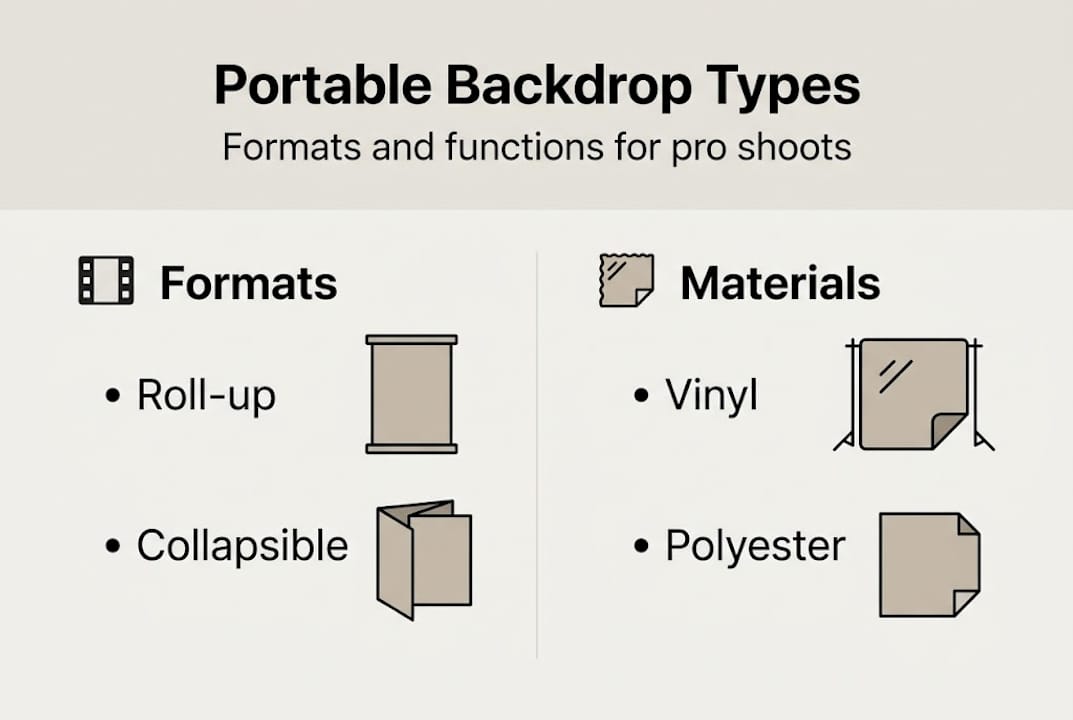
| Format | Typical size | Weight | Setup time | Best for |
|---|---|---|---|---|
| Stand-mounted roll | 5x7 ft to 10x12 ft | 8 to 20 lbs | 10 to 20 min | Portraits, fashion |
| Collapsible frame | 5x6 ft to 8x8 ft | 3 to 8 lbs | 1 to 3 min | Events, quick location |
| Flat lay vinyl/fabric | 2x2 ft to 3x4 ft | 0.5 to 2 lbs | Under 1 min | Product, food, jewelry |
| Hybrid pop-up stand | 6x8 ft to 10x10 ft | 10 to 15 lbs | 5 to 10 min | Trade shows, lifestyle |
Here’s a breakdown of scenarios where each format genuinely excels:
- Stand-mounted rolls work best in a semi-permanent studio setup where you need large, seamless backgrounds for full-body portraits or fashion lookbook images. They offer the most flexibility in background width and length, but they require more space and setup time.
- Collapsible frames are ideal for event photographers, real estate agents, or content creators shooting in variable locations. They fold into a flat circular or rectangular carry case and open in seconds. The trade-off is that they typically come in fixed sizes and printed designs.
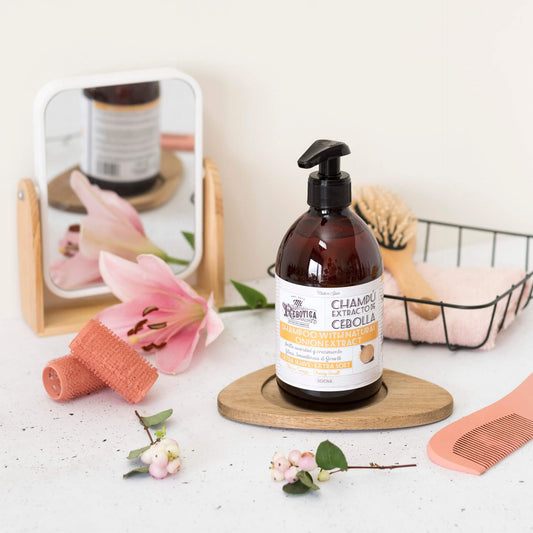
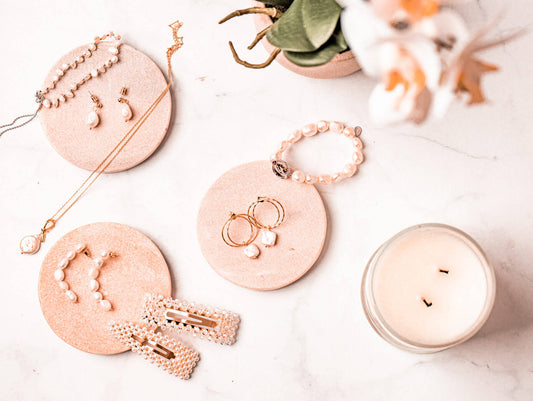
- Flat lay vinyl boards are the go-to format for large portable backdrops used in product and food photography. They require no stand, no frame, and no setup beyond placing them on a table. Lightweight and incredibly fast to use.
- Hybrid pop-up stands work well for brands doing on-site demonstrations, trade show booths, or outdoor lifestyle shoots where a larger, branded background is needed quickly.
Pro Tip: Before buying, measure the largest bag or case you can realistically transport. Then choose the backdrop format that fits within that constraint. Many photographers buy large backdrops and later find they can’t easily move them between shoots.
The biggest trade-off in backdrop ideas for pros is almost always size versus portability. Larger backdrops offer more shooting flexibility but become harder to transport and store. Smaller formats are fast and lightweight but limit the scale of your compositions. There’s no universal right answer here, only the right answer for your specific workflow.
Materials that matter: choosing the right portable backdrop
Format gets you started. Material gets you the shot. The physical composition of your backdrop affects how it transports, how it photographs, and how long it lasts before it needs replacing.
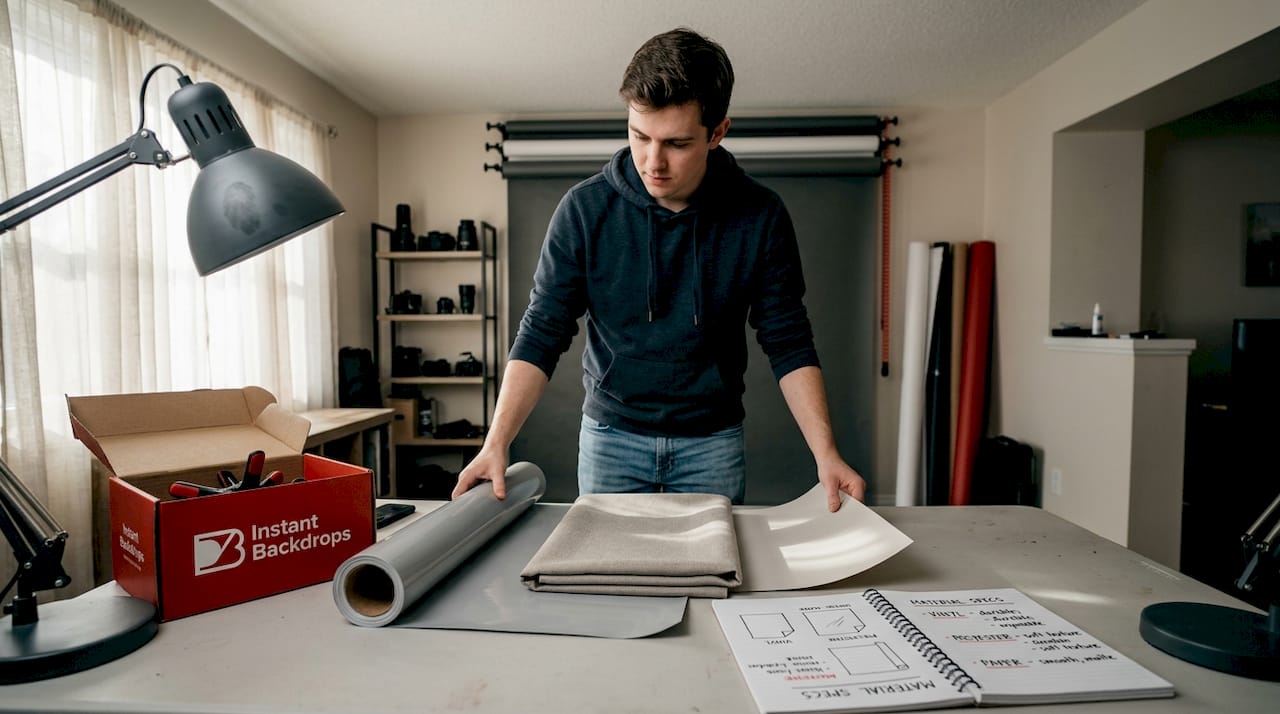
Here’s a quick comparison of the most common materials:
| Material | Weight | Foldable | Durability | Color accuracy | Wipe clean |
|---|---|---|---|---|---|
| Seamless paper | Very light | No (rolls only) | Low | High | No |
| Fabric (muslin) | Light to medium | Yes | Medium | Medium | No |
| Polyester | Light | Yes | Medium-high | High | Partial |
| Vinyl | Medium | Yes | Very high | Very high | Yes |
The material choice shapes far more than you might expect:
- Seamless paper is cost-effective and produces clean, matte backgrounds with excellent color accuracy. But it tears easily, can’t be wiped clean, and must be rolled rather than folded, which limits its portability for location work.
- Muslin fabric is soft, foldable, and available in a huge range of colors and textures. It’s a staple for portrait photographers. The downside is that it wrinkles badly in transit and often requires steaming before use.
- Polyester is more durable than muslin and resists wrinkles better. Many printed polyester backdrops offer detailed, realistic designs, though the material can create hotspots under direct flash if the weave is tight.
- Vinyl stands out for compare backdrop materials in terms of durability and photographic performance. It’s spill-proof, wipe-clean, and delivers sharp, high-resolution print quality that holds up even in close-up shots. For product, food, and jewelry photography specifically, vinyl’s wipe-clean surface is a significant practical advantage.
As this backdrop materials guide makes clear, material selection is about matching the backdrop’s physical properties to your shooting conditions, not just picking the most attractive design.
“The difference between a vinyl and a fabric backdrop becomes obvious the moment you spill coffee on your set. One wipe later, a vinyl backdrop is ready to shoot. The fabric backdrop needs to go to the laundry.”
For e-commerce sellers and food photographers, the wipe-clean factor alone can save hours of downtime across a year of regular shooting. Vinyl backdrops also fold flat without creasing, making them some of the most genuinely portable options available despite their slightly higher weight compared to fabric alternatives.
Portable backdrops in action: real-world setups and pro tips
Understanding the specs is one thing. Seeing how portable backdrops actually perform across different real-world shoot types is another. The setup decisions you make before the shoot start often determine the final image quality more than any camera setting.
For product photography, a flat lay vinyl backdrop on a table is almost always the fastest and cleanest solution. Place it flat, position your product, and shoot from above or at a low angle. No wrinkles, no shadows from a stand, and no gap between the backdrop and the surface below. Many e-commerce sellers use two or three different vinyl designs in rotation to keep their catalog images visually varied without adding setup complexity.
For portrait and lifestyle photography, a stand-mounted roll or collapsible frame backdrop gives you the vertical height you need for full-body or three-quarter-length compositions. Proper lighting placement relative to your backdrop is critical here. Keep your key light at roughly 45 degrees to your subject and angle it slightly away from the backdrop itself to avoid washing out any texture or pattern in the background.
For on-location lifestyle shoots, collapsible backdrops win on pure practicality. A good lifestyle backdrop can transform a neutral outdoor space or a client’s home into a polished, brand-consistent setting in under three minutes. Keep these in your car trunk and you’ll use them more often than you expect.
Here are the most useful actionable setup tips based on real shooting experience:
- Clip or tape flat lay backdrops to your table edge to prevent them from sliding during overhead shots. A small binder clip on two corners works perfectly.
- Allow vinyl backdrops to warm to room temperature before shooting in cold environments. Cold vinyl can stiffen temporarily and be harder to lay flat.
- Use a continuous LED panel rather than flash when shooting with printed backdrops to better preview how shadows and reflections fall across the surface before committing to a full set of shots.
- Keep a microfiber cloth nearby during any product or food shoot on a vinyl backdrop. Quick wipe-downs between shots keep the surface looking clean in every frame.
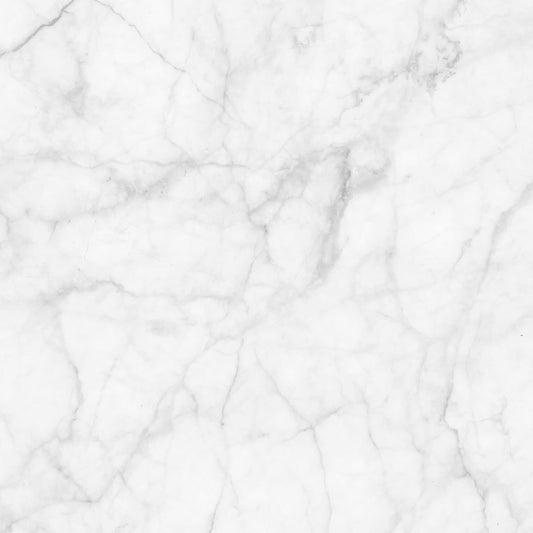
- Label your backdrop bags or cases clearly with the design name and size. When you’re on location juggling equipment, you don’t want to open every case looking for the marble texture.
Pro Tip: Roll your flat lay vinyl backdrops face-out rather than face-in when storing them. This reduces the chance of surface-to-surface friction marking and keeps the printed side in better condition over time.
A backdrop setup guide for studio-quality results also emphasizes that lighting and backdrop selection should happen together, not separately. Choosing a dark matte backdrop with a low-key lighting setup, or a bright white with high-key lighting, creates a cohesive visual that elevates the entire shoot.
Studies and surveys of working photographers consistently show that portable backdrops are used in the majority of non-studio commercial shoots. The flexibility they offer makes them a core tool, not an optional accessory. Treating them as an afterthought is one of the most common and costly workflow mistakes.
Why most photographers overlook the real value of portable backdrops
Here’s something worth saying plainly: most photographers spend significantly more time researching lenses than backdrops. It’s understandable. Lenses have measurable optical qualities and a decades-long conversation around them. Backdrops feel simpler by comparison.
But that thinking is backwards for product and content photographers. Your backdrop is in every single image. Your lens choice affects sharpness and compression, but your backdrop determines the entire visual context of the shot. A weak backdrop undermines excellent lighting and a sharp lens simultaneously.
The other overlooked problem is cheap or generic portable backdrops. They often print at low resolution, use materials that crease or reflect poorly, and fade after a handful of shoots. The short-term cost saving becomes a long-term quality problem. Clients notice. Their audiences notice.
Adopting a “backdrop-first” mindset when planning shoots means you consider the background before you consider the lens or the lighting. What story does this surface tell? Does the texture and color support the product? Checking these essential backdrop tips before every shoot is a simple habit that produces consistently stronger results. The photographers who build this into their workflow produce more cohesive, professional-looking work across entire catalogs, not just individual standout shots.
Explore professional portable backdrops for your next shoot
Putting this knowledge into practice starts with having the right backdrops in your kit. Whether you shoot flat lay product images, lifestyle content, or food photography, your backdrop quality directly shapes what’s possible in every frame.
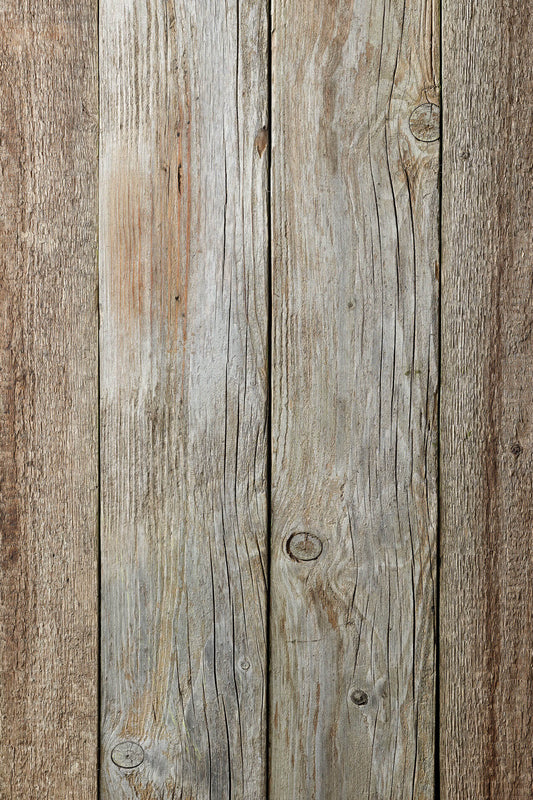
At Instant Backdrops, you’ll find a curated range of high-resolution vinyl backdrops built specifically for professional and semi-professional photographers. Every backdrop is spill-proof, wipe-clean, and printed at the resolution needed for close-up and macro work. From realistic marble and wood textures to decorative wall designs, the collection covers the setups and visual styles that today’s content creators and e-commerce sellers actually need. Browse the full range and find the portable backdrop that fits your next shoot perfectly.
Frequently asked questions
Are portable backdrops suitable for both studio and on-location shoots?
Yes, portable backdrops are designed for easy transport and quick setup, making them versatile for studio and field use. As different format options show, collapsible frames and flat lay vinyl surfaces are especially effective for location work where speed matters.
What is the most durable material for portable backdrops?
Vinyl and thick polyester tend to offer the best durability while still being portable. Vinyl in particular is wipe-clean and resistant to spills, which is why it leads in durability comparisons for product and food photography use.
How quickly can a portable backdrop be set up?
Most collapsible or pre-assembled portable backdrops can be set up in under five minutes, and flat lay vinyl backdrops are ready in under one minute. The studio-quality setup guide outlines how format choice directly affects how fast you can get shooting.
Do portable backdrops affect lighting or image quality?
Yes, backdrop material and finish significantly affect how light reflects, scatters, or absorbs across your background. As material comparisons confirm, choosing the wrong surface finish can create unwanted hotspots or reduce the contrast between your subject and background.
Recommended
- Must-Have Photography Accessories for Stunning Backdrops – Instant Backdrops
- Compare backdrop materials for professional photography results – Instant Backdrops
- Decorative wall backdrops guide: pro tips for stunning shots – Instant Backdrops
- What defines a professional photography setup: expert guide – Instant Backdrops