







Define backdrop usability: unlock creative control in photography
TL;DR:
- Usability in backdrops ensures efficient setup, durability, and consistent results during shoots.
- Material choice, size, and mounting features critically affect a backdrop’s practical performance.
- Prioritizing reliable, easy-to-maintain backdrops enhances productivity and client satisfaction.
Most photographers spend hours picking the perfect backdrop style, then wonder why their workflow feels clunky and their images inconsistent. The issue is rarely the look. It is the usability. A backdrop serves as the background behind your subject, controlling the aesthetic and mood of the image, but only when it works for you, not against you. This guide breaks down exactly what backdrop usability means, why it matters more than visual style alone, and how you can use it to sharpen both your creative output and your day-to-day efficiency.
Table of Contents
- What is backdrop usability in photography?
- Key factors: what makes a backdrop truly usable?
- How backdrop usability shapes results: product vs. lifestyle photography
- Avoiding common pitfalls: usability mistakes photographers make
- A professional take: why usability trumps style in 2026’s competitive market
- Find your ideal backdrop: solutions for pros and creators
- Frequently asked questions
Key Takeaways
| Point | Details |
|---|---|
| Usability defined | Usability measures how well a backdrop supports creative vision and workflow efficiency. |
| Material and size matter | The right materials and dimensions greatly enhance both results and ease of use. |
| Context influences needs | Product and lifestyle photography require different usability priorities for backdrops. |
| Avoid common pitfalls | Sidestep common mistakes to save time, money, and frustration. |
| Prioritize pragmatism | In competitive markets, reliable usability trumps pure aesthetics. |
What is backdrop usability in photography?
Now that we have established just how critical a backdrop is to every image, let us define what actually makes a backdrop usable or not in your day-to-day work.
Backdrop usability is a straightforward concept, but it is often overlooked. Simply put, it describes how effectively a backdrop serves your artistic and practical goals in real working conditions. It is not just about whether something looks nice on a product page. It is about whether that backdrop integrates cleanly into your shoot, session after session.
“A backdrop in photography is any surface or material placed behind the subject. It serves as the background, helping to control the aesthetic and mood of the image.” — StudioBinder
When usability is front of mind, you are thinking about setup speed, material resilience, storage ease, and how naturally the backdrop fits different lighting situations. These are the things that affect your output every single day, not just during a one-off styled shoot.
Common signs of poor backdrop usability:
- Persistent wrinkles or creases that show up even in close-up shots
- Materials that absorb spills and stains, making cleanup difficult
- Color casts that shift your subject’s apparent skin tone or product color
- Thin or flimsy material that shifts during shooting
- Awkward mounting requirements that slow setup time
Here is the key distinction worth noting: usability is not the same as style. You can have a gorgeous marble-effect backdrop that is nearly impossible to clean, warps with humidity, or arrives with creases that never fully iron out. That backdrop might look stunning in a catalog photo but frustrate you every time you use it. Understanding the role of backdrops in lifestyle shoots makes it clear why a backdrop that looks beautiful but behaves poorly will cost you time, money, and creative momentum.
Pro Tip: When evaluating any new backdrop, run through a quick mental checklist before purchasing: Can I clean it easily? Will it mount without fuss? Does it resist wrinkles? Can I store it without damage? If the answer to any of these is uncertain, dig deeper before buying.
Reliable backdrops allow your products, food, and subjects to shine without demanding extra attention. That is exactly what high usability delivers.
Key factors: what makes a backdrop truly usable?
With a basic definition set, it is time to break down the practical traits that make one backdrop stand out in real-world use.
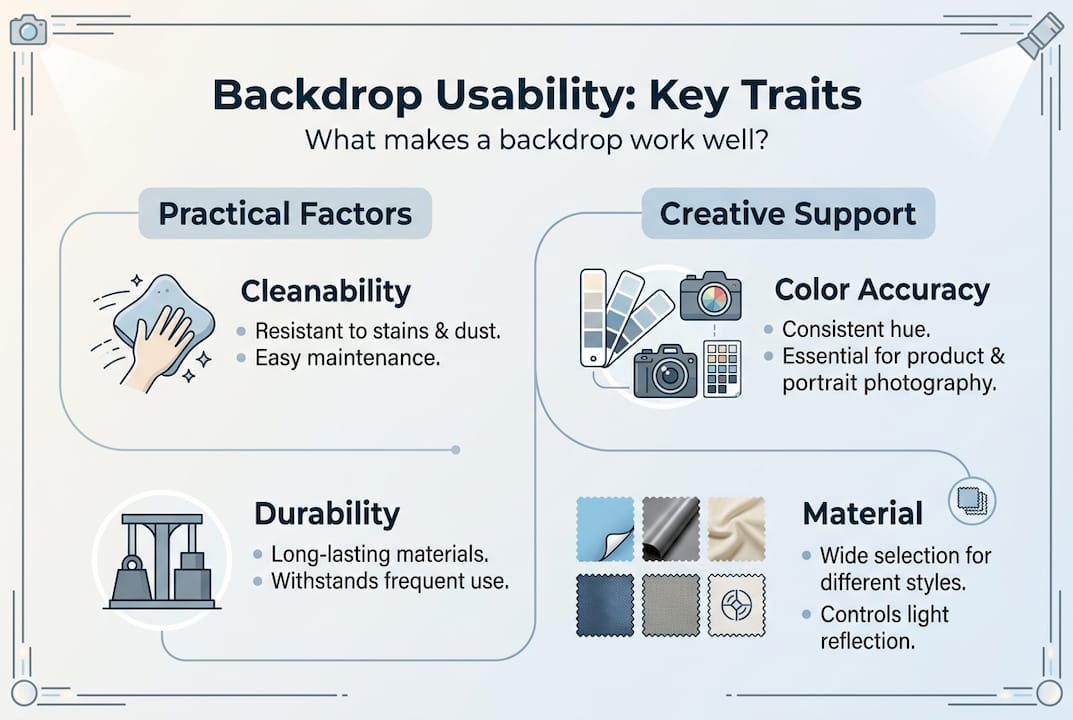
The material your backdrop is made from is the single biggest driver of usability. Different materials behave very differently under studio lights, during shoots involving food or liquids, and over time with repeated use. Understanding the right backdrop materials for your shooting context changes everything.
Backdrop material comparison
| Material | Weight | Cleanability | Color accuracy | Durability |
|---|---|---|---|---|
| Paper | Light | Poor (single use) | Good | Very low |
| Fabric | Medium | Moderate (washable) | Good | Medium |
| Vinyl | Medium to heavy | Excellent (wipe clean) | Very high | Very high |
| Canvas | Heavy | Moderate | High | High |
Vinyl consistently stands out for professional use. It is spill-proof, wipe-clean, and maintains vibrant, accurate color over hundreds of shoots. Most professional studios favor vinyl or canvas for exactly these reasons, and the quality of your backdrop material directly determines how many productive sessions you can get out of a single purchase.
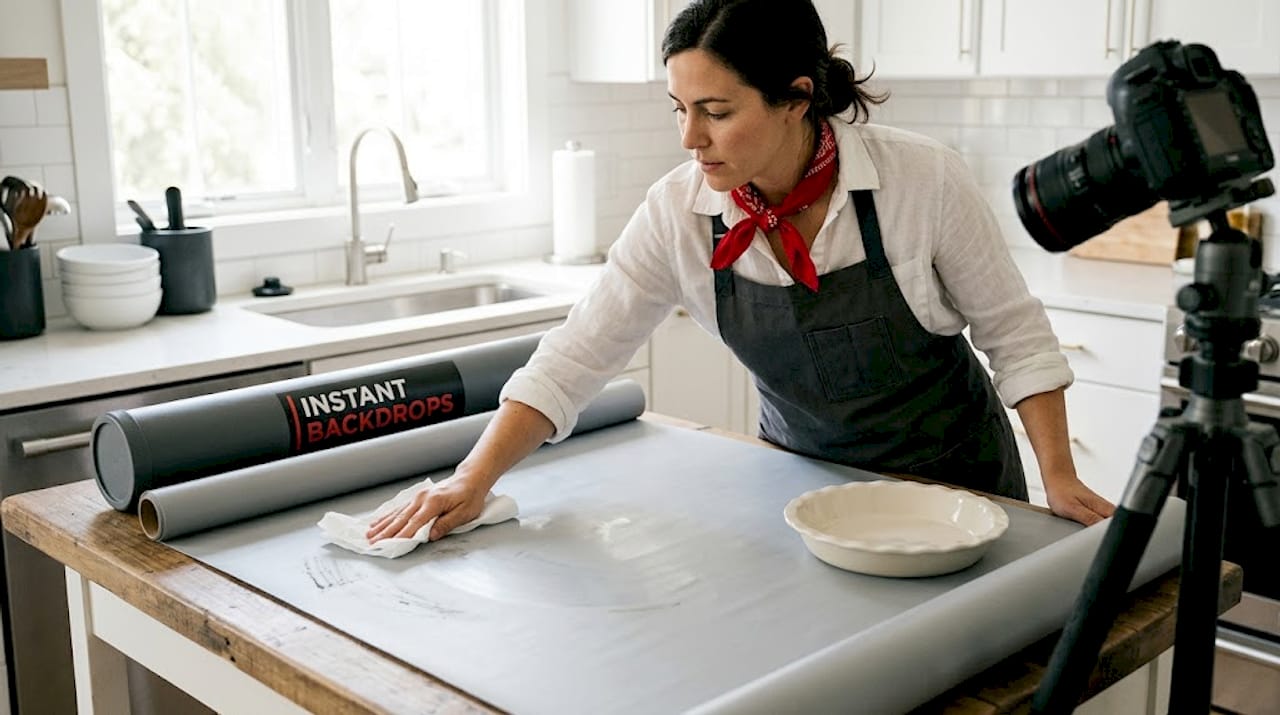
Paper backdrops, while cost-effective upfront, are essentially single-use for anything involving food, props, or product spills. They tear, crease permanently, and cannot be cleaned. Fabric offers more reuse value but can wrinkle deeply and requires steam or ironing between sessions. For high-frequency shooters, that adds real time to every session.
Steps to evaluate usability during backdrop selection
- Check the size against your typical shooting area. A backdrop that is too small forces you into awkward angles and generates more post-production cropping. Review large backdrop sizing to understand which dimensions match your studio and subject types.
- Assess the surface texture. Smooth surfaces work best for product and jewelry photography. Textured surfaces add depth for lifestyle and food shoots, but too much texture in the wrong context creates distracting visual noise.
- Evaluate mounting compatibility. Does the backdrop come with grommets, eyelets, or a pole sleeve? Make sure it works with your existing stand setup or wall mounting system.
- Confirm cleanability for your shoot type. If you shoot food, cosmetics, or any wet products, non-porous materials are essential. Test or verify before committing.
- Consider storage requirements. A backdrop you cannot store flat or rolled without damage will arrive wrinkled at every shoot. Stiff materials need flat storage; flexible vinyl can be rolled without creasing.
- Review resolution and print quality. For close-up product and macro shots, a low-resolution print will show pixelation. High-resolution vinyl prints remain sharp at any focal length.
The hidden cost of ignoring these factors is significant. Poor material choices lead to extra retouching time in post-production, reshoots, and ultimately, lower client satisfaction. When a client receives final images with a visible crease running through the background or a color cast that shifted the entire mood of the shot, that is a direct usability failure, not a creative one.
How backdrop usability shapes results: product vs. lifestyle photography
Once you know what to look for, understanding backdrop usability becomes even more valuable by seeing its tangible effects on your final images and efficiency.
The way usability plays out differs meaningfully between product photography and lifestyle photography. In product photography, precision is everything. Clients expect clean, consistent backgrounds with accurate color representation and zero distractions. In lifestyle photography, the backdrop needs to feel natural and support storytelling, often across a variety of setups and subjects. Both contexts demand high usability, but in different ways.
Usability effects: product vs. lifestyle shoots
| Factor | Product photography | Lifestyle photography |
|---|---|---|
| Color consistency | Critical, affects brand representation | Important for mood, some variation acceptable |
| Setup speed | High priority (multiple SKUs per session) | Important when shooting multiple setups |
| Texture visibility | Usually minimal or controlled | Can be bold for narrative depth |
| Backdrop changes | Frequent, fast changes needed | Less frequent but must be flexible |
| Cleanup requirements | High (products with spills, cosmetics) | Moderate |
| Size requirements | Moderate to large depending on product scale | Large, accommodates people and props |
For e-commerce product shoots, the ability to swap backdrops quickly between different product lines directly affects how many items you can photograph in a day. If each backdrop swap takes ten minutes because you are dealing with stubborn wrinkles or awkward mounting, that adds up to hours of lost shooting time across a full catalog session. A high-usability backdrop reduces that time to under two minutes.
In lifestyle shooting contexts, consistent backgrounds across a content series signal professionalism to both clients and audiences. A backdrop that warps, fades, or photographs inconsistently across sessions undermines the visual cohesion of a brand’s entire content strategy.
Workflow pain points that high-usability backdrops solve:
- Spending 20 to 30 minutes per session steaming out wrinkles
- Retouching color casts in editing because the backdrop read differently under different lights
- Reshooting because a crease was not visible until images were reviewed on screen
- Limited shooting angles because the backdrop size was too small for the setup
- Degraded image quality on close-up shots because of low-resolution printing
Pro Tip: Choose larger, neutral backdrops for versatility in mixed shooting environments. A single large, neutral-tone vinyl backdrop can serve as a clean product surface, a lifestyle background, and a flat lay base, reducing the number of setups you need to maintain without sacrificing quality.
Avoiding common pitfalls: usability mistakes photographers make
Having explored the advantages of usable backdrops, let us make sure you do not fall into common traps that even seasoned pros encounter.
The most costly mistakes in backdrop selection tend to come from prioritizing aesthetics over function. Here are the most frequent usability errors and how to sidestep them.
Top five backdrop usability mistakes
-
Buying for looks, not function. A backdrop that photographs beautifully in a catalog image may be impossible to maintain in real use. Always request material specifications and read reviews from working photographers, not just visual ratings.
-
Ignoring mounting requirements. Many photographers realize too late that their new backdrop has no mounting mechanism compatible with their setup. Always verify whether the backdrop requires a specific stand, wall mount, or pole system before purchasing.
-
Choosing the wrong size for your shooting space. A backdrop that is too narrow or too short creates immediate problems with composition and flexibility. Understand backdrop size essentials before making any purchase decision.
-
Improper storage leading to permanent damage. Rolling vinyl too tightly, folding fabric, or storing anything damp leads to creases and material degradation. Follow manufacturer storage guidelines carefully and invest in proper storage tubes or bags.
-
Ignoring versatility when building a studio. Buying several highly themed backdrops before establishing a set of core, versatile neutrals is a common beginner error. Build your collection from reliable multi-use backdrops first, then add specialty pieces. Explore backdrop ideas for pros to see how versatile choices can serve multiple creative briefs.
A backdrop that looked stunning in product photos arrived with deep fold marks that never fully disappeared, even after steaming. The whole shoot had to be rescheduled, costing hours of lost studio time and a frustrated client. This kind of outcome is entirely preventable with the right material and usability checks upfront.
Knowing how to spot poor usability before purchasing is a genuine skill. Look for specific red flags: vague material descriptions, no mention of cleanability, unclear mounting options, and low-resolution product images that prevent you from seeing the actual surface texture. A quality backdrop supplier will always provide detailed specifications because they know that working photographers need them.
If a listing cannot tell you whether the surface is wipe-clean, what the print resolution is, or how it mounts, those are warning signs. Quality manufacturers want you to know exactly what you are getting because their product can stand up to the scrutiny.
A professional take: why usability trumps style in 2026’s competitive market
Beyond the mechanics, it is worth pausing for a candid look at what actually gives photographers an edge with their backdrops today.
Here is something the photography community does not say enough: style is easy to fake, but usability is earned. Anyone can choose a visually appealing backdrop. Very few photographers take the time to think critically about whether that backdrop will perform under pressure, day after day, session after session.
In high-pressure commercial shoots, the backdrop is almost never what clients remember. They remember whether you were efficient, whether the images were consistent, and whether the whole process felt smooth. A reliable, easy-to-manage backdrop contributes silently to all of those outcomes. The advantages of large backdrops in professional photography extend far beyond simple coverage. They reduce compositional constraints, allow for faster shooting, and give you room to direct subjects without constantly worrying about the frame edges.
We have seen shoots where a photographer’s beautifully styled but impractical backdrop caused a 45-minute delay because it would not hang flat. That kind of friction does not just cost time. It costs client confidence, and in a competitive market, client confidence is everything.
The reality in 2026 is that clients are more visually sophisticated than ever, but what they truly value is consistency and reliability. They want to know their products or campaigns will photograph the same way every single time. That level of predictability only comes from backdrops with genuine usability.
Our strongest advice: when competition is tight, prioritize reliable, easy-to-manage backdrops over elaborate visual themes. Versatile, high-quality neutral backdrops will serve you across more briefs, more clients, and more creative contexts than any single eye-catching design. Build the reliable foundation first. Then layer in personality as your collection grows.
Find your ideal backdrop: solutions for pros and creators
If you are ready to upgrade your studio’s effectiveness, your next choice matters.
The concepts in this guide, from material selection and size evaluation to workflow efficiency and versatility, come to life when you are working with backdrops that were actually built with professional use in mind. That means spill-proof vinyl surfaces, high-resolution prints that stay sharp under macro lenses, and sizes designed to give you genuine creative flexibility.
At Instant Backdrops, every backdrop is designed with both style and usability at the core. Whether you shoot food, products, jewelry, or full lifestyle setups, the range covers realistic marble, wood, stone, and decorative wall options, all in durable, wipe-clean vinyl. Bundle deals and curated collections make it simple to build a versatile studio kit without second-guessing your choices. You get the aesthetic you want and the reliability your workflow demands.
Frequently asked questions
What does backdrop usability mean for professional photographers?
Backdrop usability describes how easily and reliably a backdrop integrates into your workflow, allowing creative freedom and efficient shooting without constant maintenance or setup frustration. It covers material durability, mounting ease, cleanability, and size appropriateness for your shooting context.
Which materials offer the highest usability for frequent shoots?
Vinyl and canvas backdrops are the most practical for reliability, durability, and hassle-free cleaning. Vinyl is especially strong for food and product photography because its non-porous surface resists spills and wipes clean in seconds.
Why does backdrop size impact usability?
Appropriate size reduces wrinkles, unwanted cropping, and setup time, streamlining both shooting and editing. A backdrop that controls aesthetic effectively must be large enough to fill the frame at your preferred shooting distance and angle.
How can I quickly tell if a backdrop has high usability?
Check for sturdy mounting options, crease resistance, easy cleaning, and confirmed size versatility before purchasing. Any supplier that cannot clearly answer these four questions in their product listing is worth approaching with caution.
Recommended
- 12 backdrop styling ideas to elevate your photography – Instant Backdrops
- Unlock the power of backdrops in visual storytelling – Instant Backdrops
- Backdrop versatility: master pro-quality visual storytelling – Instant Backdrops
- Master the role of backgrounds in photography: boost sales – Instant Backdrops